
Eastern Filbert Blight: A Tale of Two Hazelnuts
If the hazelnut could tell one story, and the pathogen Anisogramma anomala could tell another, would the union of these screenplays begin in the field of a farmer somewhere in the Willamette Valley in the year 1973? Or some tens of millions of years prior, when the two organisms were evolving across unrecognizable landscapes?
The tale of EFB and its host — the hazelnut — is relevant to agroforesters interested in cultivating novel nut crops within Eastern North America.
In this article, we explore:
The Corylus Genus
The Hazelnut Industry
Anisogramma anomala (EFB)
EFB Disease Cycle
Breeding Programs
Hazelnuts: An Emerging Agroforestry Crop
Growing Hazelnuts
Highlights:
Eastern Filbert Blight (EFB) fundamentally shaped the modern U.S. hazelnut industry. After the disease spread through Oregon’s Willamette Valley, many orchards experienced severe losses, forcing the industry to rely heavily on resistant cultivars and long-term breeding programs.
The American hazelnut (Corylus americana) possesses valuable disease resistance largely absent in European hazelnut (Corylus avellana), save for key resistance genes found in European hazel. Modern breeding efforts increasingly use American germplasm to combine EFB resistance with the nut quality and yield characteristics of European varieties.
The EFB pathogen has an unusually complex and stealthy life cycle. Infections can remain symptomless for many years before visible cankers appear, making early detection and management difficult and contributing to the disease’s historical spread.
Future expansion of hazelnut production beyond the Pacific Northwest may depend on hybridization. We discuss growing interest in regionally adapted hybrids and diversified perennial systems that could support hazelnut cultivation in new landscapes while improving ecological resilience.
The Hazelnut (Corylus) Genus

C. avallena (bottom) vs. C. americana (top). Note distinct growth & cultivation habits. From Molnar and Melenbacher (2021).
The European hazelnut, the most widely cultivated Corylus species, has a range stretching from the British Isles to Turkey, where the ubiquitous shrub grows in hedges, along roadsides, in thickets, woodlands, cliffs, gullies, and in cultivated environments — all across a varied number of climatic regimes, but generally preferring moist, well-drained soils and mild winters (1). Given the plant’s rhizomatic, sucker-forming growth habit, many farmers prune European hazelnuts back to a central leader, with trees growing to about 12-20 feet tall, around the size of a semi-dwarf apple tree. Wild-growing hazelnuts look—well, wild— forming dense thickets that can crowd out certain ecosystems if left unmanaged, with traditional management methods including fire (2). In late spring, the plants grow flowers, i.e. “catkins,” which look like skinny yellow corn cobs dangling from year-old shoots; perhaps this is why hazelnuts are known colloquially as “cobnuts.” The American hazelnut is the less-popular cousin of the European hazel, occupying a similar niche across temperate North America, found along streams and forest margins, in meadows and woodlands, across paradoxically well-drained yet moist soils, and increasingly in managed environments, where it is planted by American gardeners, conservationists, and landscapers. Notably absent from this list of American hazelnut acolytes are farmers. Unlike its European counterpart, the American hazelnut is not widely cultivated in agrarian settings— largely because it does not yet possess “commercializable” traits, save for one: its resistance to Eastern Filbert Blight (EFB), or Anisogramma anomala.
US Hazelnut Industry: Origins & Growth
Ansiogramma anomola is an obligate biotroph whose impact is mostly felt in the Willamette Valley of Oregon, where the small but mighty hazelnut industry is heavily concentrated. With US hazelnut production spanning 93,167 total acres, of which 87,128 are located in Oregon alone, the hazelnut industry is relatively small and insular compared to other nut crop industries (3); for reference, there are about 1.5 million acres of almonds and over 500,000 acres of pistachios planted in the US. Globally, the hazelnut industry generates $5 billion per year in revenue, with US production accounting for 3-5% of this supply (4). The success of the Pacific Northwest (PNW) industry is largely a product of its favorable maritime climate. Within a context of climate change and increasing public visibility into supply chain ethics, the outlook for the US hazelnut industry’s growth is promising. Although Turkey is the global leader in hazelnut production, responsible for 70% of the world’s supply, Turkish farmers are increasingly susceptible to drought and other extreme weather events, fluctuating dynamics of pests and pathogens, and increasing public scrutiny over reported human rights violations observed across the supply chain. Buyers—namely the Ferraro Group, who wields a sizeable influence over the hazelnut supply— are scrambling in the face of these challenges, looking to increase hazelnut supply from other regions to mitigate risk. These promising regions includes Oregon, Washington, and—interestingly—the temperate Northeast and Midwest of the United States. More on this later.
The origins of the PNW hazelnut industry dates back to 1858, when the first European hazelnut tree was planted in Scottsburg, Oregon— a small bucolic town where the dedicated botanist can still apparently locate 3 x 150 year old trees (5). The century that followed Corlyus avalenna’s first introduction was witness to a flurry of activity led by pioneering hazelnut growers and eclectic horticulturalists, involving breeding and selection for regionally-adapted cultivars, massive propagation efforts led by individual nuserymen, commercial orchard development by lighthouse farms showcasing its profitability, and eventually grower-led organizing, resulting in a veritable industry by the year 1949 (6). It was then—at what appeared to be the precipice of the hazelnut industry’s seemingly inevitable flourishing— that Eastern Filbert Blight was introduced to Washington on imported on nursery stock in the year 1958 (7), though its impact would not be felt until over a decade later. Was this introduction, and the industry collapse that followed, as inevitable as the woodpeckers and summer winds carrying Cryphonectria parasitica spores from American chestnut to American chestnut? Imagining alternative histories is not the purview of this paper, but perhaps a time traveling horticultural historian can report back on the shoulda-coulda-woulda’s of US agriculture.

Newspaper clipping from Lewiston Tribune (1996). Wayne Chambers, hazelnut farmer, laments the destruction of his 70-year old hazelnut trees.
Anisogramma Anomala: EFB Deep Dive
Ansiogramma anomola is an ascomycete pathogen in the class Sordariomycetes, order Diporthales. For the phylogeny enthusiasts reading this, Diporthales is described as “a species-rich fungal order usually associated with forest trees as endophytes, pathogens and saprophytes” (8), with some of its most infamous members including pathogens such as Cryphonectria parasitica and Gnomoniopsis castaneae— two devastating diseases of chestnut. The impact of EFB, at least to the hazelnut orchardists of the PNW, has been similarly devastating. First officially described in Lewis County, Washington in 1973, the disease quickly destroyed all surrounding orchards in the county, thereafter moving south at a rate of 1-3 miles per year, spread primarily by wind and rainfall but also likely by nursery stock. By 1996, 30-40% of Oregon orchards had either reported outbreaks or were located within a few miles of a diseased orchard (8), with one grower lamenting that “the writing is on the wall” and that he would likely not replant his orchard after the last of his 70-year-old trees died out (9). Genomic studies comparing the genetic diversity and population structures of Anisogramma anomala in the PNW and New Jersey have confirmed the single-point origin of the disease in the PNW, where genetic diversity is limited (10).
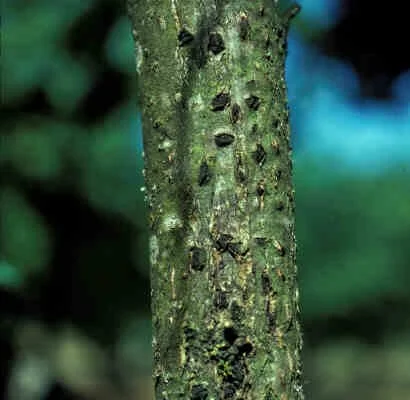
Despite its persistence in hazelnut orchards throughout the 70’s and 80’s, the life cycle of the pathogen was not elucidated until the early 90s. Within orchards, the progression of the disease moves slowly, silently, and at variable rates, often going unnoticed until a sharp decline in tree productivity occurs — usually between 3 and 10 years post-infection (11). News clippings from the 90’s indicate that some growers did not realize the disease was present until 8 years after initial suspected infection. The most visible symptom of the disease is the formation of large cankers that appear as elongated, sunken lesions on branches and twigs, on which black “football shaped” stromata— or pressure-powered, perithecia-bearing mycelial cushions— erupt through the phloem and surface of bark (12), usually around July or August (13), serving as the most distinctive sign of disease. These cankers girdle and kill branches, expanding at a rate of 1m per year, eventually killing the European hazelnut tree itself. Infected American hazelnut trees, by contrast, are far less susceptible to the disease, exhibiting only small cankers, if any at all. Many experts infer that this resistance is evidence of co-evolution between the American hazelnut and Anisogramma anomala; however, a number of confounding factors — namely, key resistance genes present in European hazelnuts cultivars — complicate this hypothesis, which is based on the assumption that pathogen origin can be inferred by the range of resistant hosts, which may or may not always be true. It’s possible that the resistance found in European hazelnuts is “exapted,” meaning it developed not as a product of co-evolution with the pathogen but as a result of some unrelated selection pressure (14).

EFB Disease Cycle
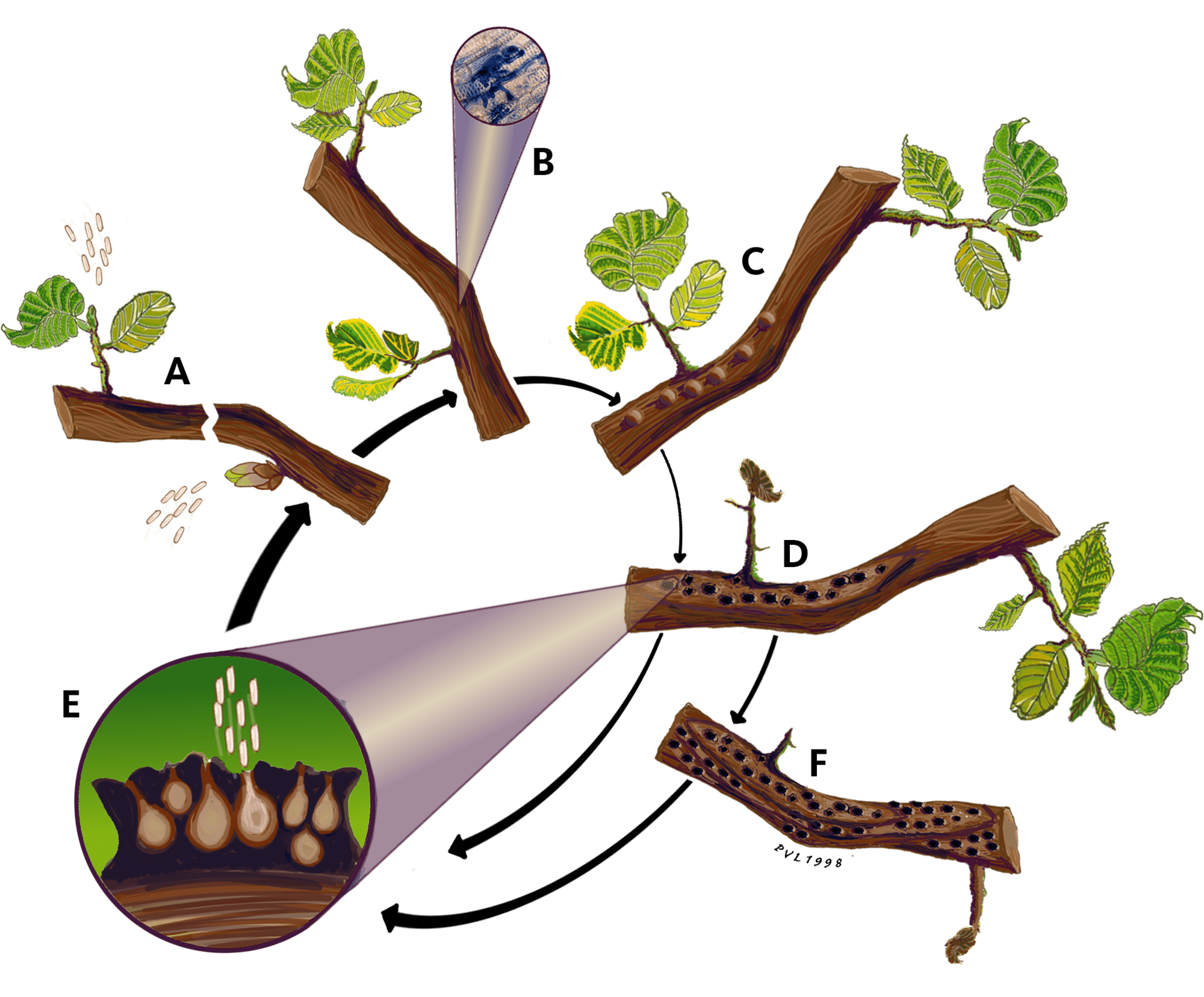
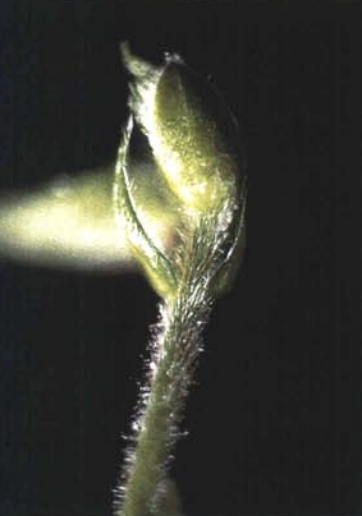
A. Spores infect breaking buds and young shoot tips. B. 15-month latent period. C. Stromata first visible during the spring and early summer. D. Stromata with mature spores in early fall. E. Spores actively discharged during rainy periods.F. Expansion of perennial cankers. Diagram from Oregon State University.
In 1996, Johnson et al. wrote that “the most challenging aspect of understanding Eastern Filbert Blight has been the determination of how and when A. anomola gains entry into a hazelnut tree.” (12) It should also be noted: Anisogramma anomala, like many other obligate biotrophs, is notoriously difficult to culture in laboratory settings, with self-inhibiting compounds and other unknown factors limiting cultured growth to a maximum diameter of 5mm in vitro (15). Initial speculation that the pathogen was vectored by eriophoid bud mites, a long-standing hypothesis, was disproven when Pinkerton and Stone (1995) showed that the tender young tissues of hazelnut shoots are susceptible to direct penetration by germinating ascospores, which, unlike many other biotrophs, do not form specialized appressorial structures (16). The ascosopores erupt from distinct flask-shaped perithecia, the primary sexual fruiting body of the disease, after a combination of humidity and free moisture cause the sticky, hydrophilic, mucilaginous matrix within the perithecia to swell. This swelling induces enough pressure to cause an eruption of ascospores from the long ostiole of the fruiting body — thereby dispersing spores into the air, facilitating long-distance wind-mediated travel, as well as into surrounding rain splash, facilitating intra-canopy dispersal (12). The mucilaginous substance on the ascospores also facilitates adhesion onto the immature tissues of the plant, where they land in clusters of 8 or so spores at the base of plant trichomes (16).Only the teleomorph (i.e. sexual stage) of the pathogen has been observed. Although the primary spore dispersal period is late autumn when perithecia have matured, trees are most susceptible to infection in the spring, when apical meristems of tender shoots and buds are actively growing (12). Spores are released from autumn to spring, with most dispersal occurring during rainfall events, with infection and dispersal not correlating to rainfall intensity.
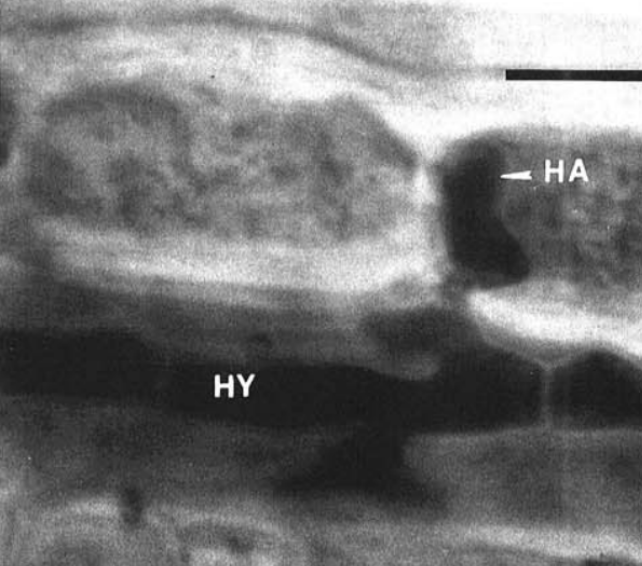
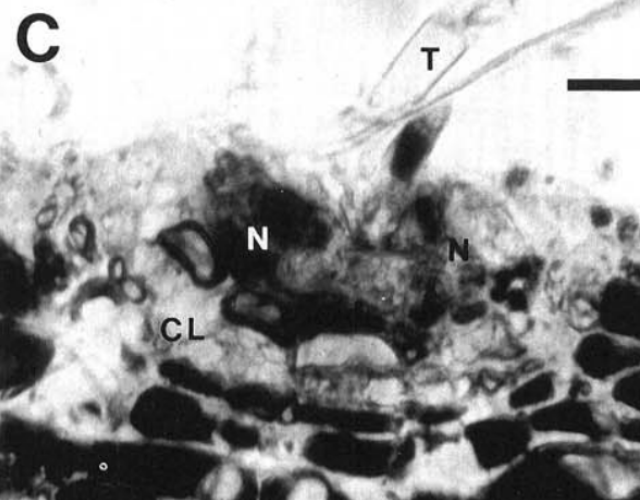
Once the pathogen enters a hazelnut tree, a long incubation period of around 12-18 months ensues, during which the fungi grows within the host tissue, causing no visible external symptoms. Internally, however, infected tissue is visibly altered, with hazelnuts responding by way of the “hypersensitive response,” whereby the plant kills off its own infected tissue to halt the progression of disease (16). The hypersensitive response is how biotrophs, pathogens that keep the host alive, attack and gain nutrients from plants. This response has been observed as “localized necrosis” apparent beneath germinated and non-germinated spores. Inside the plant, the fungus first forms an intercellular infection vesicle, from which secondary infection hyphae have been observed to emerge in vitro. Hyphae colonize the secondary xylem, phloem, and cambial tissue, forming haustoria-like hyphae that penetrate and absorb nutrients from cells.16 Necrosis of the tissue surrounding the initial vesicle is also observed, as is a cascade of physiological changes induced by the host: thickening of the cuticles and cell walls around necrotic tissue, accumulation of “osmotic substances” (assumed to be tannins) in infected cells, etc.16 Given the difficulty of culturing the fungus, the exact effectors produced have not been elucidated; however, a recent genome-wide assembly of the pathogen revealed not only a uniquely large genome (340 megabases) and large number of Transposable Elements (TE’s), but also a number of genes likely involved in pathogenicity and infection, include genes encoding for 614 carbohydrate active enzymes, 762 secreted proteins and 165 effectors, of which 50 % are inferred to be unique to A. anomala (17). “Effectors” refer to a diversity of proteins, biosynthetic compounds, sRNA, and other fungal byproducts that assist in pathogenicity.
EFB Management
In the aftermath of Anisogramma anomala’s first introduction to the PNW, hazelnut growers, researchers and policy makers scrambled to find solutions. A number of cultural and chemical controls were tested and proven effective, including pruning and burning of infected material, orchard sanitation, and regular fungicide applications during peak susceptibility, beginning around bud break and repeated until sporulation ceases in late April (12). A series of quarantines were also issued prohibiting the sale of hazelnut nursery stock, limiting further spread. Given that the repeated use of fungicides use can be costly, growers with already slim margins were in need of better disease management strategies, the most effective solution being genetic. Fortunately, the most widely planted cultivar in the PNW, “Barcelona,” displayed moderate resistance to EFB, and another European pollenizer variety known as “Gasaway” — named after farmer Richard Gasaway, whose orchard was home to the anomalous tree — showed almost total resistance. Unfortunately, what Gasaway possessed in resistance it lacked in the important commercial traits required by growers, producing “low yields of small, long nuts of poor quality,” poor kernel flavor, and a fibrous, hard-to-remove pellicle (18). Breeders nevertheless took note of this resistance, conducting a series of controlled crosses that revealed the source of resistance to be single dominant gene (LG6) at which Gasaway was heterozygous (i.e. possessing different alleles at this gene) (12) The development of resistant cultivars — which takes about 17 years 23 — soon followed.
Breeding Programs
Between 2009 and 2015, Oregon State University released European hazelnut cultivars such as “ Jefferson,” “Yamhill," “Dorris,” “Wepster,” and “McDonald” — all possessing the resistant “Gasaway gene.” However, when planted in the Eastern US, many of these varieties still seemed to succumb to the disease: Greenhouse studies growing these resistant cultivars alongside diverse isolates of Anisogramma anomala showed that certain Eastern EFB genotypes can, in fact, overcome the Gasway resistance (R) gene.19 This discovery was bad news for everyone, calling attention not only to the precarity of the recovering PNW hazelnut industry — perhaps one fungal introduction away from another collapse — but also to the difficulty of establishing a hazelnut industry in Eastern North America. Despite these disheartening developments, dogged researchers sought resistance in other places, including the Corylus americana genome, as well as across the European hazelnut’s 6 centers of diversity, where domestication is said to have occurred independently (23). One of the goals of this new breeding effort was to incorporate “quantitative resistance” into new cultivars, i.e. resistance conferred by multiple genes, as opposed to just one.
Six major hazelnut breeding programs exist across the US, several of which have united to form the Hybrid Hazelnut Consortium. This consortium includes Rutgers University, the Arbor Day Foundation, Oregon State University, and the University of Nebraska-Lincoln. Rutger’s program (launched in 1996) is unique in its mission to breed EFB-resistant hybrid hazelnuts adapted to the unique climate of the temperate Northeast, where a background of diverse and abundant Ansisogramma anomala populations looms large and where regular late frosts threaten to destroy hazelnut crops. The program is also known for its large breeding orchards and popular commercial hybrid releases. Scouring Europe, the Caucuses, Central Asia and North America for candidate Corylus spp. genetics, researchers have collected and analyzed thousands of Corlyus avalenna accessionsfrom its centers of diversity, thousands of Corlyus americana accessions from diverse geographies in North America, and have evaluated over 25,000 seedlings at Rutgers alone. Given the long latency period for EFB development, advanced methods were developed to screen for disease resistance, shrinking the incubation period from 15 months to just 6 months.20 From the European collections, researchers located different R genes (LG7 and LG2) that could be stacked with LG6 for improved resistance (21). A combination of polygenic resistance and resistance from a single dominant gene (LG7) has been identified in the American hazelnut, meaning C. americana can serve as a robust source of EFB resistance in breeding programs (22).
Hybrid Hazelnuts: An Emerging Agroforestry Crop
Till now, the American hazelnut has been only a supporting character in our story, but its role in breeding for EFB resistance and climatic adaptability is not insignificant. The American hazelnut’s native range is extensive, stretching from Saskatchewan in the North to the state of Georgia in the South. In general, C. americana produces low yields of small, thick-shelled nuts, which to date has made the American hazelnut undesirable in commercial-scale agricultural systems. By contrast, hybrid hazelnuts — the product of controlled crosses between C. avallena and C. americana — combine the commercializable qualities of European hazel with the EFB resistance and cold tolerance/late blooming habit of American hazel.
These hybrid breeding programs aim to expand hazelnut production within the temperate Northeast and Midwest of the US. The desire to develop regional, perennial specialty crop industries in temperate North America is not new. In his seminal work, “Tree Crops: A Permanent Agriculture” (1913), Dr. Russel J. Smith argues for the development of regionally-adapted tree crop industries based on the systematic selection and breeding of native fruit and nut crops. Candidate crops include species such as honey locust, honey berry, elderberry, chestnut, hickory, oak, hazelnut, and more. This “permanent agriculture” described by Smith would reduce soil erosion while providing reliable sources of nutritious foods for people and livestock, preventing the degradation of agricultural lands that has historically coincided with civilizational collapse (23) The agroforestry movement is the modern torch-bearer of these century-old ideas, introducing Russel J. Smith’s ideas to a wide audience that includes farmers, landowners, natural resource professionals, and agribusiness.
To date, hybrid hazelnuts have mostly been planted by small-scale landowners, hobbyists, and nurseries (24). Despite the crop’s suitability across a broad stretch of American farmland, including riparian areas, marginal soils, and high-polluting watersheds where permanent crops could have a profound impact, farmers have yet to adopt the crop in significant numbers— largely due to a lack of longer-term studies examining the economics of the crop (24). In general, post-harvest uncertainty is a major barrier to perennial crop adoption, with farmers reporting a lack of harvest machinery, post-harvest processing facilities, and clear markets for agroforestry crops such as hazelnuts as prohibitive to new crop adoption (26). Additional reasons include high upfront establishment costs and a lack of information. Although early studies of hybrid hazelnut yields have been promising, showing comparable yields to Corylus avallena (25), these studies have not been replicated by on-farm trials or case studies with actual farmers. With four major hybrids (“Somerset,” “Monmouth,” “The Beast,” and “Raritan”) released by Rutger’s University and the Hybrid Hazelnut Consortium in 2020, efforts to promote and study the viability of hybrid hazelnuts are still just beginning, with 140 early adopters across 25 states serving as test beds for broader adoption. Given that hazelnuts typically begin bearing within 2-5 years after planting, many of these early trails are just beginning to bear fruit. These farmers on the bleeding edge of the budding hazelnut industry will be essential to communicate the potential of this new crop to other growers.
Want to Grow EFB-Resistant Hazelnuts?
Successful establishment and production of Eastern Filbert Blight (EFB)-resistant hazelnuts requires careful site selection, soil preparation, fertility management, weed control, and pollination planning. Hazelnuts perform best on well-drained soils with moderate fertility and pH levels between 6.0 and 7.0, as poorly drained conditions can increase root disease pressure and reduce tree vigor. During establishment, vegetation management is critical to minimize competition for water and nutrients, while supplemental irrigation may be needed during drought periods to ensure adequate growth and nut fill. Although EFB-resistant cultivars substantially reduce disease risk, regular scouting for pests, diseases, and nutrient deficiencies remains important to maintain orchard health. Commercial production also requires compatible pollinizer cultivars distributed throughout plantings to ensure effective cross-pollination and consistent yields. Long-term management includes pruning to maintain canopy structure, monitoring soil fertility through periodic testing, and implementing integrated pest management practices to sustain productivity and profitability.
If you are curious about whether hazels are a good fit for your land, you can contact us to schedule your free consultation today.
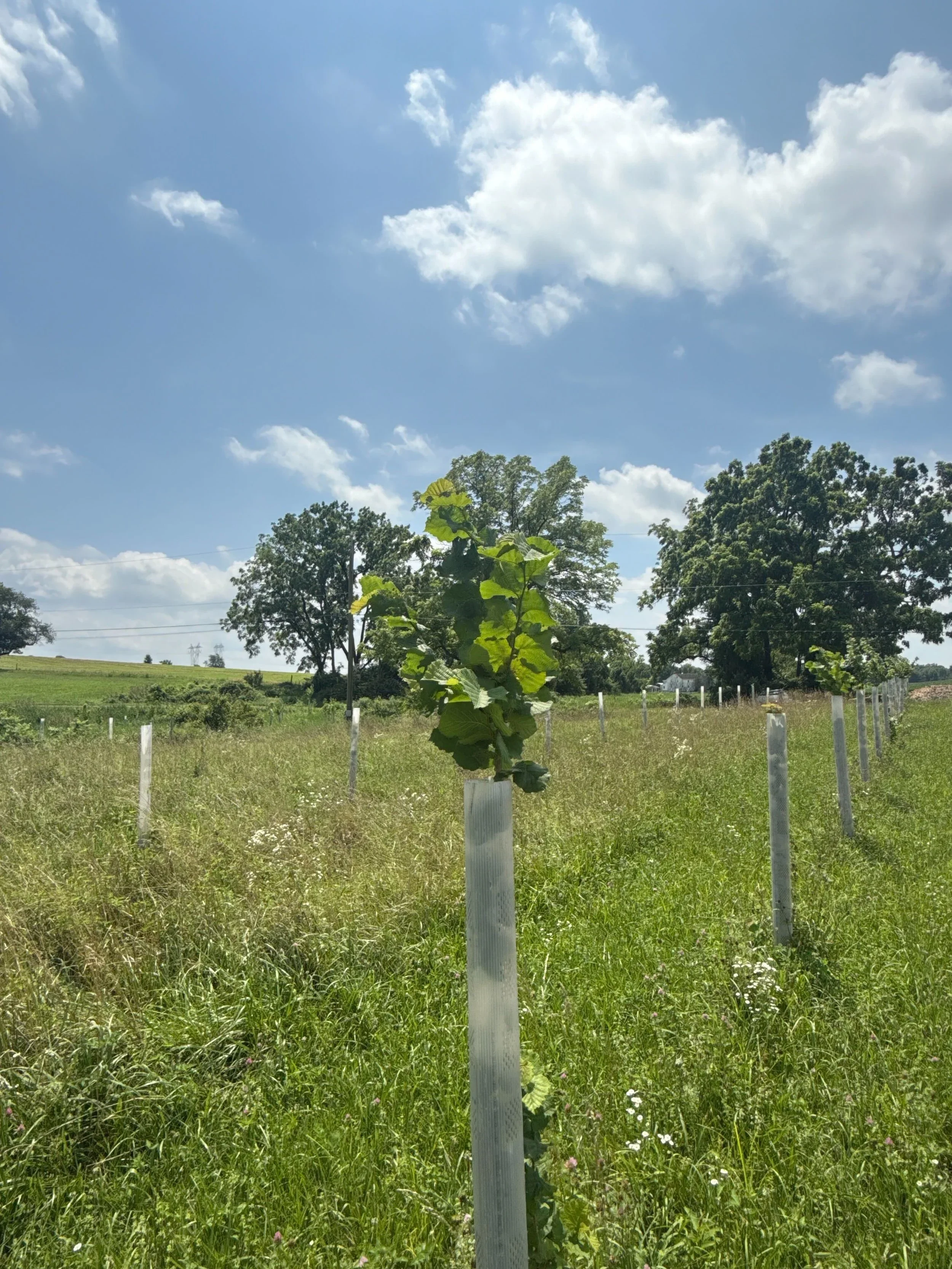
Pictured to the left: A multifunctional Riparian buffer planting featuring Rutger’s hybrid hazelnuts, planted by Propagate in partnership with Stroud and Wildfox Farm. Learn more about the planting here.
References:
1. Hicks, D. (2022). Biological Flora of Britain and Ireland: Corylus avellana. Journal of Ecology, 110, 3053–3089. https://doi.org/10.1111/1365-2745.140082. Shanovich, Hailey & Nordrum, Benesikwe & Windmuller‐Campione, Marcella. (2025). Consider bagaan : The importance of hazel to Indigenous Peoples of eastern North America and implications for sovereignty. Earth Stewardship. 10.1002/eas2.70035. 3. U.S. Department of Agriculture, National Agricultural Statistics Service. (2026). Quick Stats database. https://quickstats.nass.usda.gov/4.University of Wisconsin–Madison Division of Extension. (n.d.). Hazelnuts. https://cropsandsoils.extension.wisc.edu/hazelnuts/. 5. Hummer, K.E. (2001). HISTORICAL NOTES ON HAZELNUTS IN OREGON. Acta Hortic. 556, 25-28. DOI: 10.17660/ActaHortic.2001.556.2 6. Olsen, J. (2013). Growing hazelnuts in the Pacific Northwest: Introduction (EM 9072). Oregon State University Extension Service.7. Oregon State University. (n.d.). Maps of the eastern filbert blight epidemic. College of Agricultural Sciences. https://bpp.oregonstate.edu/efb/location/maps-efb-epidemic8. Jiang N, Voglmayr H, Bian DR, Piao CG, Wang SK, Li Y. Morphology and Phylogeny of Gnomoniopsis (Gnomoniaceae, Diaporthales) from Fagaceae Leaves in China. J Fungi (Basel). 2021 Sep 24;7(10):792. doi: 10.3390/jof7100792. PMID: 34682214; PMCID: PMC8540803.9. Associated Press. (1996, December 30). Filbert farmers face dilemma. Lewiston Morning Tribune, p. 5B. 10. Tobia, J., Muehlbauer, M. F., Honig, J. A., Pscheidt, J. W., Hillman, B. I., & Molnar, T. J. (2024). Genetic diversity analysis of Anisogramma anomala in the Pacific Northwest and New Jersey. Plant Disease, 108(8), 2422–2434. https://doi.org/10.1094/PDIS-08-21-1827-RE11. Pscheidt, J. W., & Ocamb, C. M. (n.d.). Hazelnut (Corylus avellana)—Eastern filbert blight. Pacific Northwest Plant Disease Management Handbook. Oregon State University. https://pnwhandbooks.org/plantdisease/host-disease/hazelnut-corylus-avellana-eastern-filbert-blight12. Johnson, K. B., Mehlenbacher, S. A., Stone, J. K., Pscheidt, J. W., & Pinkerton, J. N. (n.d.). Eastern filbert blight of European hazelnut: It’s becoming a manageable disease. Oregon State University & USDA Agricultural Research Service.13. Pscheidt, J. W. (1989). Detecting and controlling eastern filbert blight (EC 1499). Oregon State University Extension Service. https://extension.oregonstate.edu/catalog/ec-1499-detecting-controlling-eastern-filbert-blight14. Gherbawy, Y., & Voigt, K. (Eds.). (2010). Molecular identification of fungi. Springer.15. Stone, Jeffrey K., et al. “Axenic Culture of Anisogramma Anomala: Evidence for Self-Inhibition of Ascospore Germination and Colony Growth.” Mycologia, vol. 86, no. 5, 1994, pp. 674–83. JSTOR, https://doi.org/10.2307/3760539. Accessed 27 Apr. 2026. 16. Pinkerton, J. N., Stone, J. K., Nelson, S. J., & Johnson, K. B. (1995). Infection of European hazelnut by Anisogramma anomala: Ascospore adhesion, mode of penetration of immature shoots, and host response. Phytopathology, 85(11), 1260–1268.17. Cohen AB, Cai G, Price DC, Molnar TJ, Zhang N, Hillman BI. The massive 340 megabase genome of Anisogramma anomala, a biotrophic ascomycete that causes eastern filbert blight of hazelnut. BMC Genomics. 2024 Apr 5;25(1):347. doi: 10.1186/s12864-024-10198-1. PMID: 38580927; PMCID: PMC10998396.18. Mehlenbacher, S. A., Thompson, M. M., & Cameron, H. R. (1991). Occurrence and inheritance of resistance to eastern filbert blight in ‘Gasaway’ hazelnut. HortScience, 26(4), 410–411. 19. Muehlbauer, M., Capik, J. M., Molnar, T. J., & Mehlenbacher, S. A. (2018). Assessment of the ‘Gasaway’ source of resistance to eastern filbert blight in New Jersey. Scientia Horticulturae, 235, 367–372. https://doi.org/10.1016/j.scienta.2018.03.01920. Molnar, T. J., Baxer, S. N., & Goffreda, J. C. (2005). Accelerated Screening of Hazelnut Seedlings for Resistance to Eastern Filbert Blight. HortScience, 40(6), 1667–1669. https://doi.org/10.21273/HORTSCI.40.6.166721. Şekerli, M., Koma, G. K., Snelling, J. W., & Mehlenbacher, S. A. (2021). New Simple Sequence Repeat Markers on Linkage Groups 2 and 7, and Investigation of New Sources of Eastern Filbert Blight Resistance in Hazelnut. Journal of the American Society for Horticultural Science, 146(4), 252–266. https://doi.org/10.21273/JASHS05040-2122. Revord, R. S., Lovell, S. T., Capik, J. M., Mehlenbacher, S. A., & Molnar, T. J. (2020). Eastern Filbert Blight Resistance in American and Interspecific Hybrid Hazelnuts. Journal of the American Society for Horticultural Science, 145(3), 162–173. https://doi.org/10.21273/JASHS04732-1923. Smith, J. R. (1929). Tree crops: A permanent agriculture. Harcourt, Brace and Company 24. IKnezick, D. (2026, April). [Interview]. 25. Braun, L. C., Demchik, M. C., Fischbach, J. A., Turnquist, K., & Kern, A. (2019). Yield, quality and genetic diversity of hybrid hazelnut selections in the Upper Midwest of the USA. Agroforestry Systems, 93(4), 1507–1516. https://doi.org/10.1007/s10457-018-0209-726. Stanek, E.C., Lovell, S.T. & Reisner, A. Designing multifunctional woody polycultures according to landowner preferences in Central Illinois. Agroforest Syst 93, 2293–2311 (2019).