
Site Prep & Equipment for Agroforestry
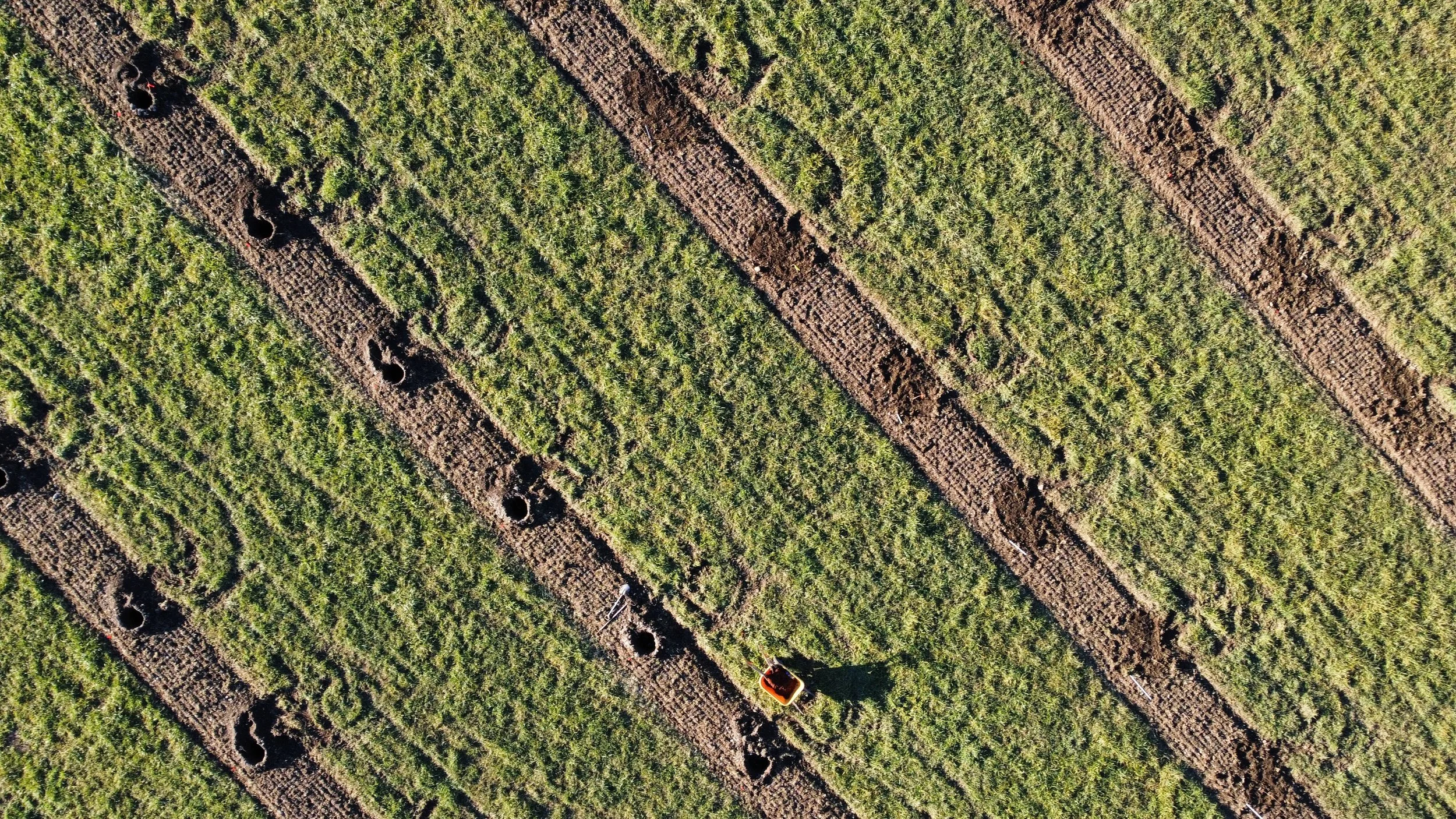
Within our agroforestry hubs across the Midwest (OH, KY), Northeast (PA, NY, MA), and beyond, our farm services team curates our mobile equipment fleet to meet the needs of farms of varying scales and soil types, such that we can efficiently and affordably prepare land, shape its topography, manage vegetation, and prepare for planting.
Establishing a high-performing perennial cropping system begins long before the first tree or shrub goes in the ground. Whether it’s a vineyard, orchard, or multi-strata food forest, effective site preparation enables more efficient planting, better root establishment, & greater operational efficiency for years to come. In the absence of site preparation, agricultural soils may be overly compacted, uneven, degraded, rocky, and otherwise unsuitable for planting; a custom site preparation plan developed by a technical assistance provider will identify suitable species, the steps needed to resolve structural or chemical issues with soil, as well as system- and species-specific preparation needed to ensure successful tree establishment.
1. Remote and On-Site Analysis
Before metal meets soil, a site assessment is needed to identify suitable species and potential barriers to project development, be it drainage issues, nutrient deficiencies, rocky or degraded soil, competing vegetation, or challenges with access. Our team relies on soil & climate datasets, soil laboratory analyses, the results of compaction and on-site soil quality assessments, percolation tests, vegetation assessments, and other tools to identify what trees would realistically perform well across farm your farm landscape, and what remediation if any is needed — and feasible — prior to planting. Our software, Overyield, includes over 40+ soil & climate datasets, alongside suitability maps & economic information, to support the planning process.
2. Mowing, Clearing, Grading & Field Readiness
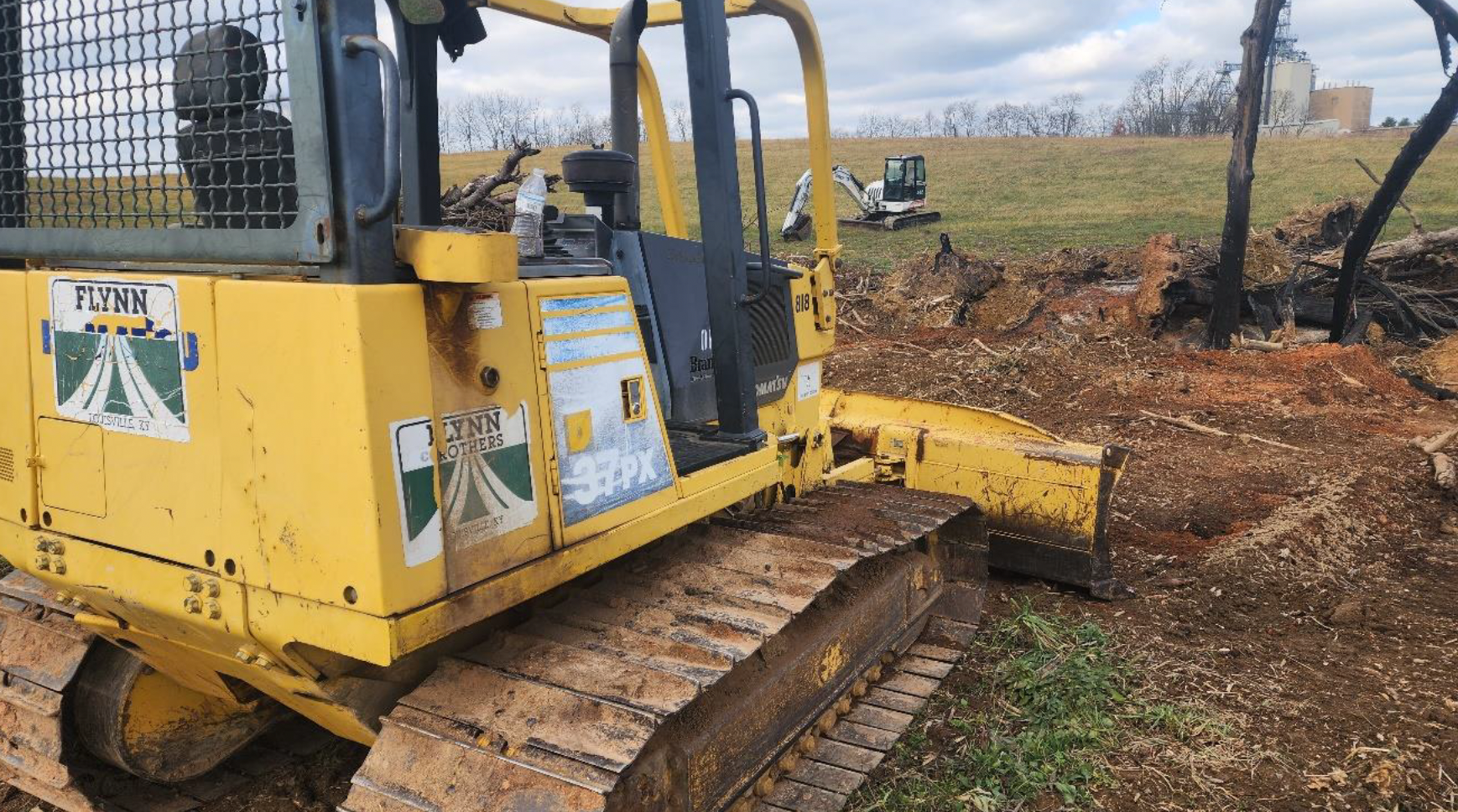
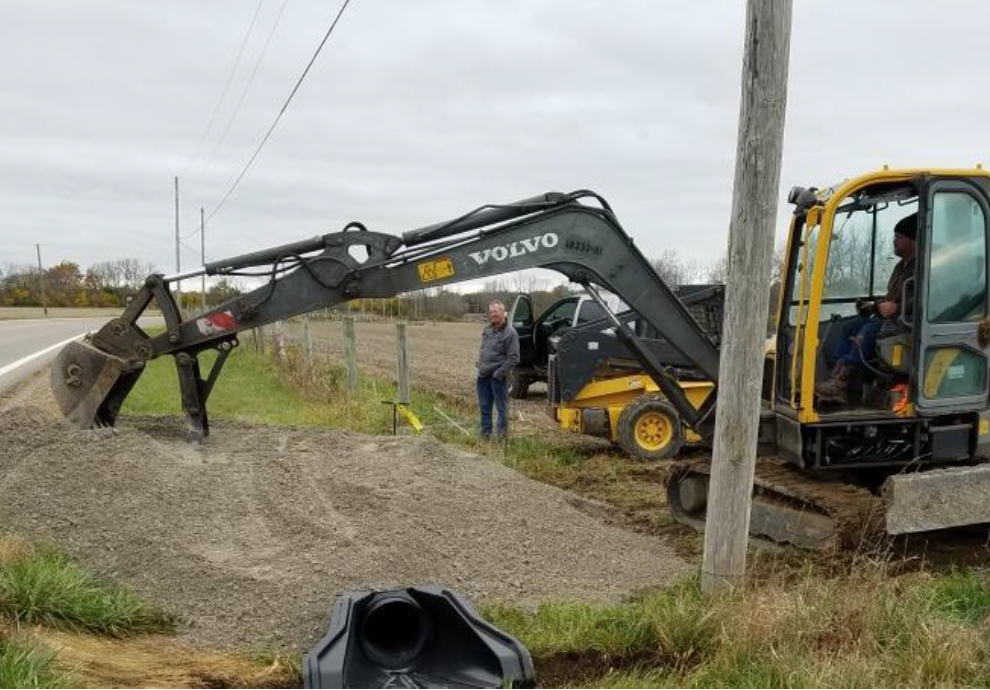
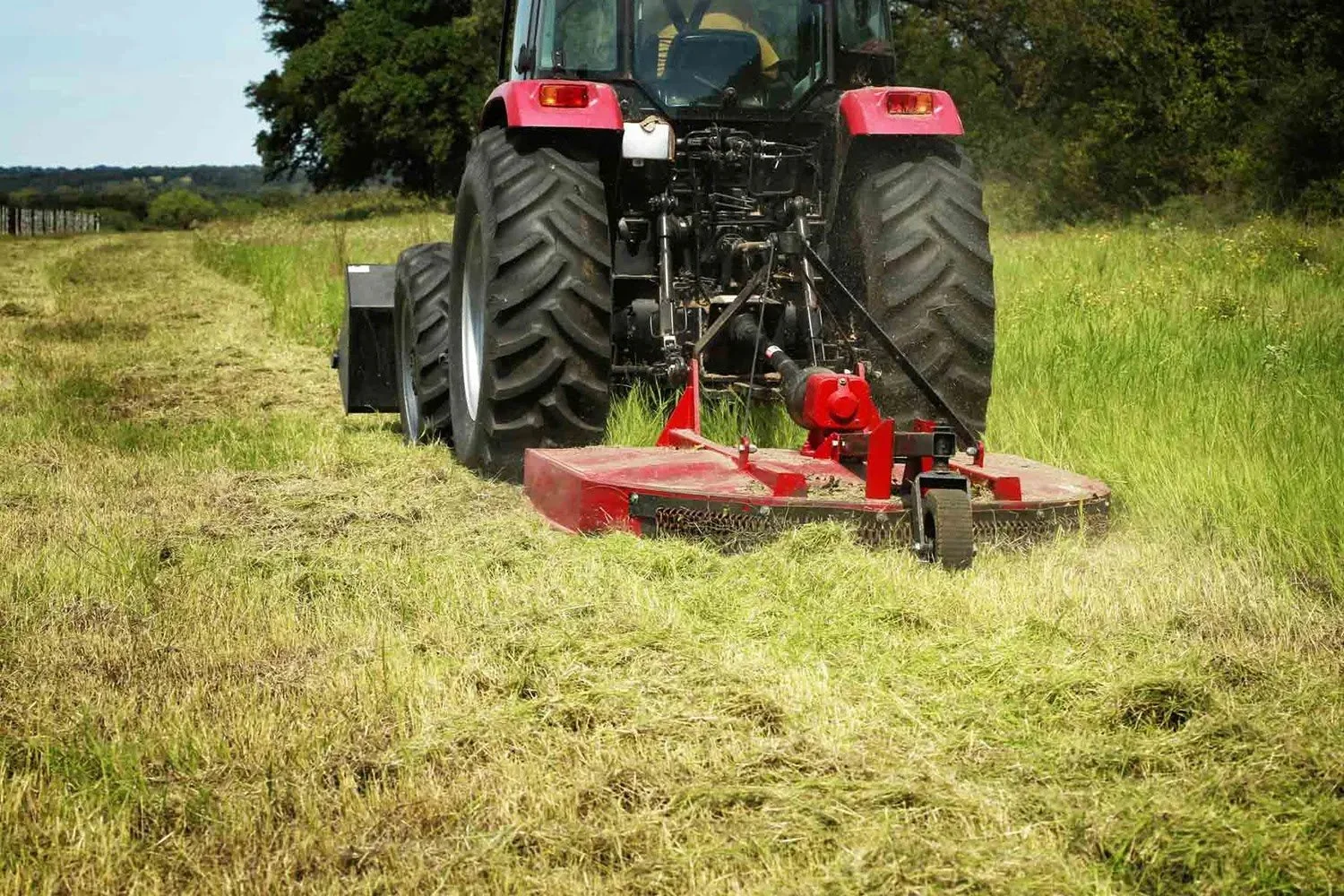
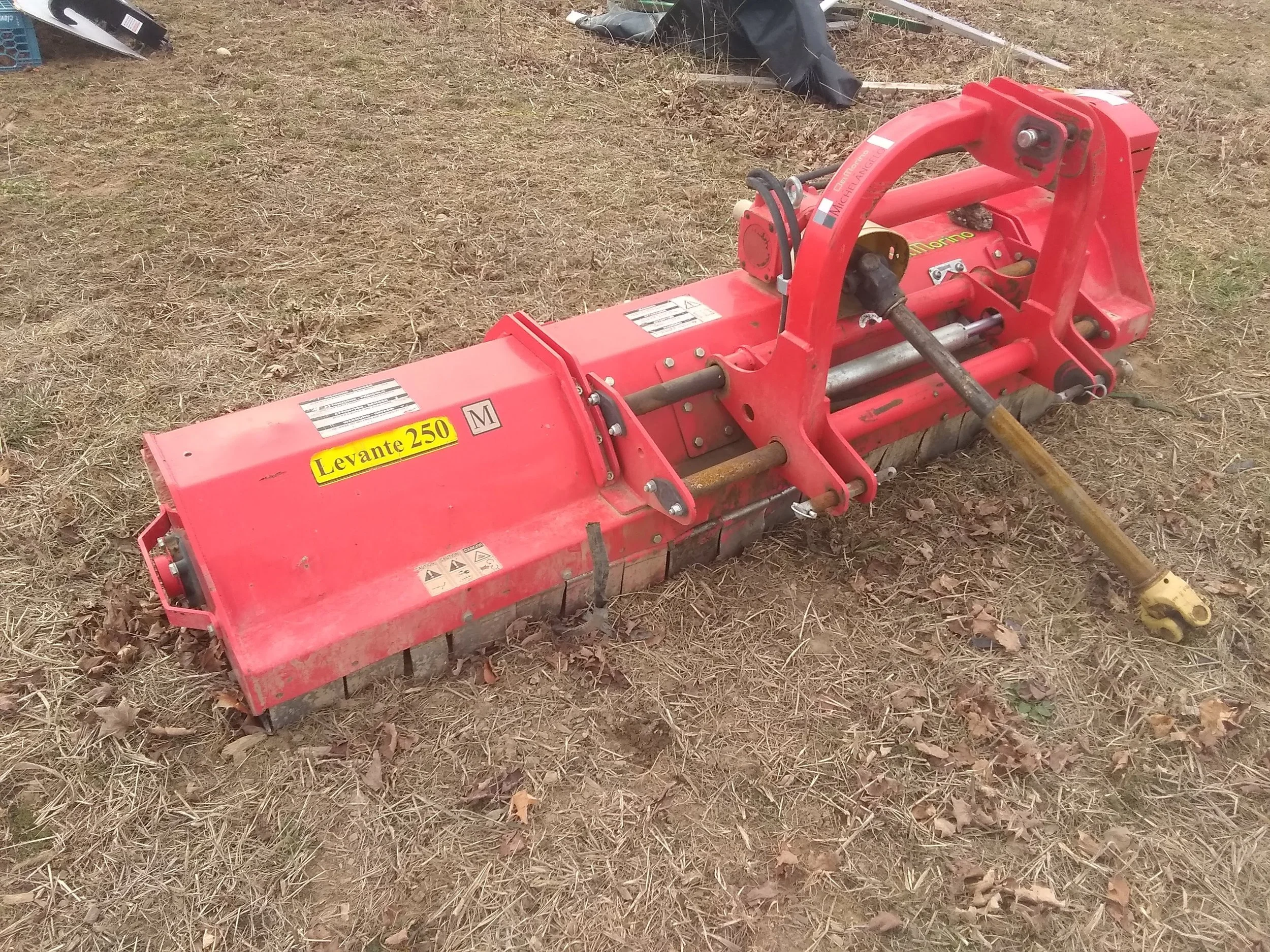
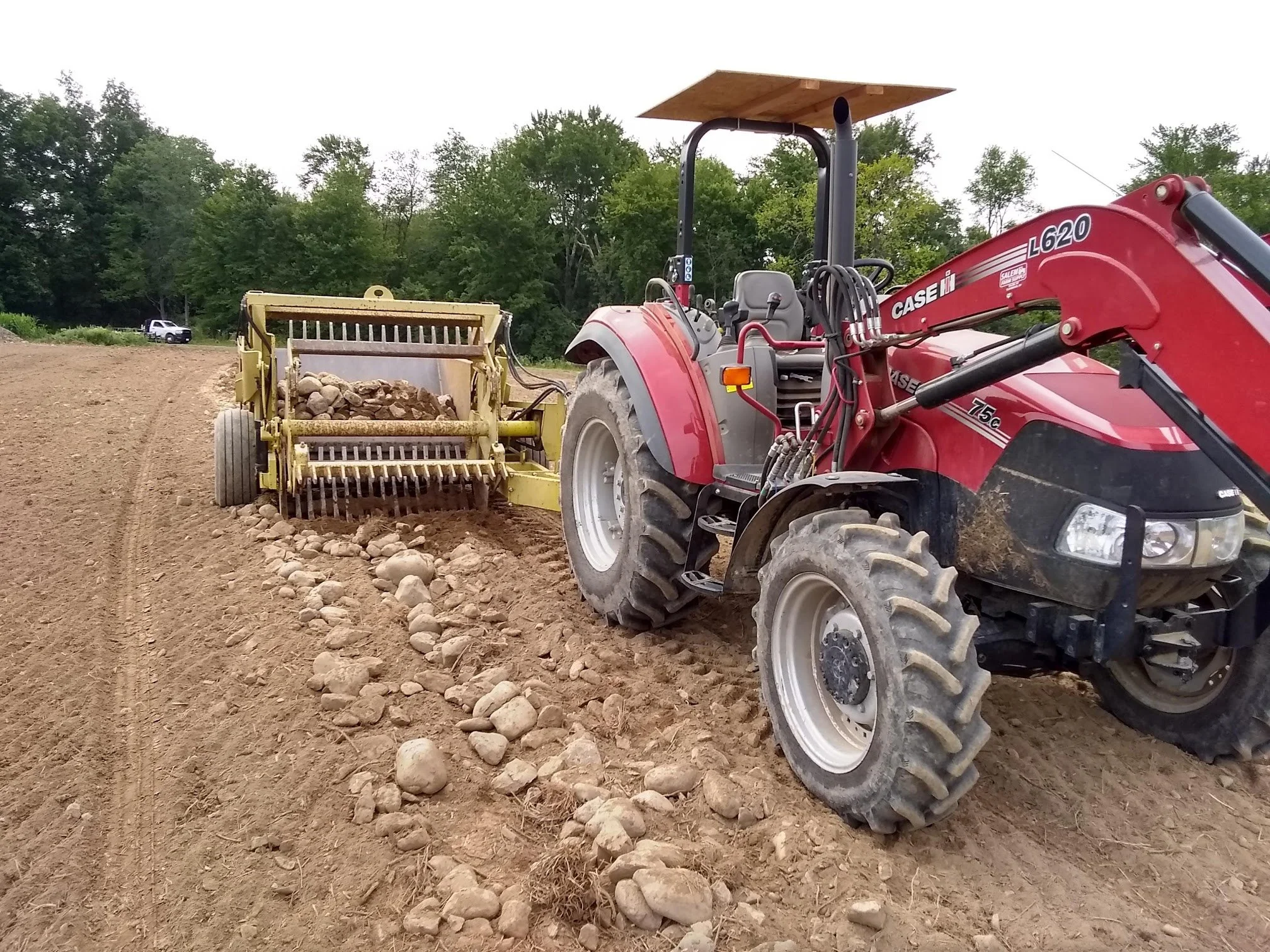
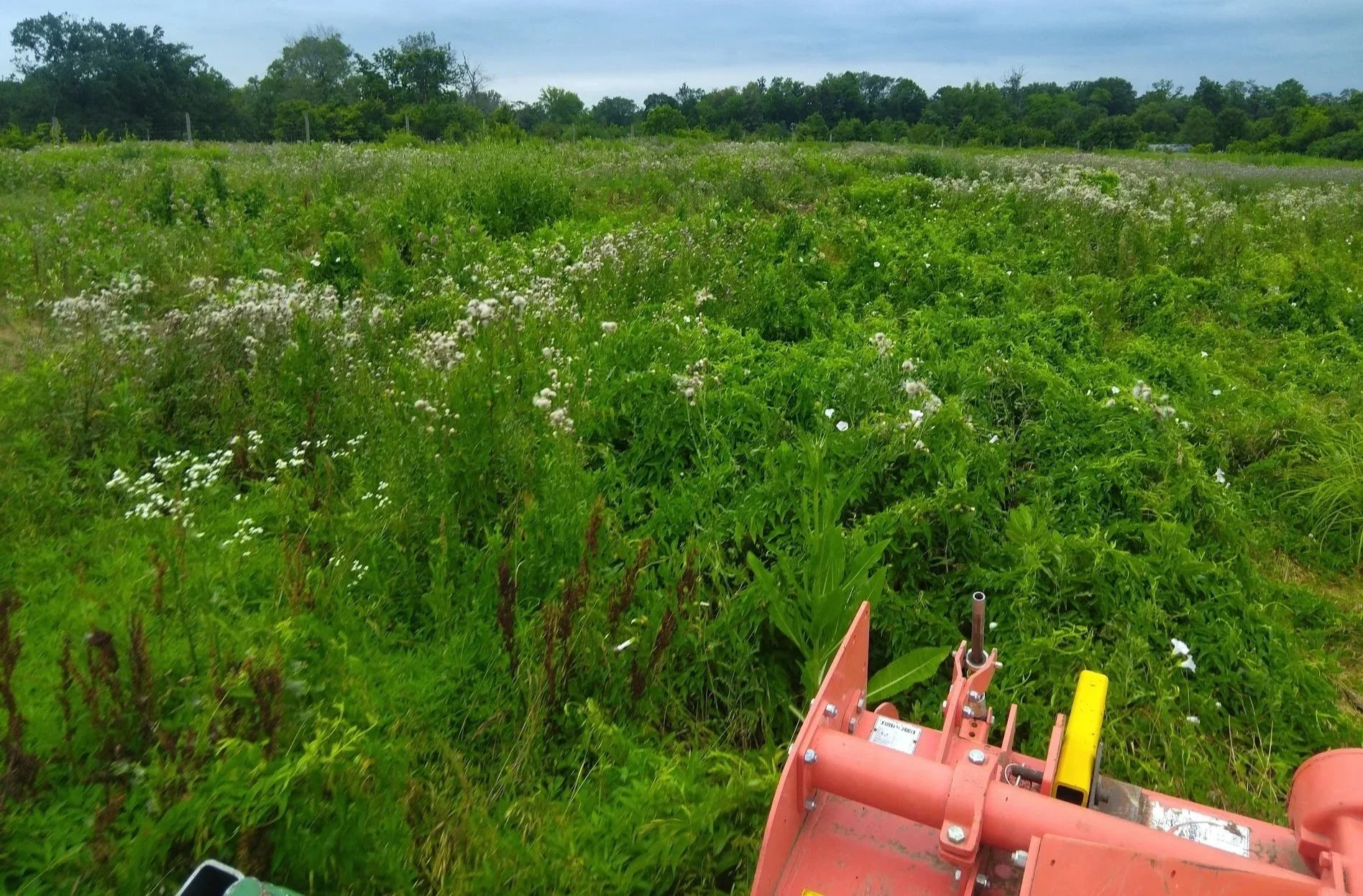
The vegetation present on a site will determine whether intensive preparation is needed prior to bringing in other equipment.
Preparing land that has not been actively managed for agricultural purposes or perennial crops can require more intensive interventions, such as clearing debris— woody vegetation, dense herbaceous groundcover, etc.— and grading, which enables future operators to traverse the site with ease. Especially rocky or uneven ground can make it difficult to operate specialized equipment, while a dense groundcover will limit the effectiveness of or clog up tillage equipment. These machines ensure the field is free of obstructions, properly graded, and ready for deeper tillage.
Dozer – Used to remove fence rows, push debris, and contour fields during early land prep stages.
Excavator – Essential for removing old trees, pulling stumps, reshaping drainage, and refining planting corridors.
Skid Steers – Versatile tools for moving soil, gravel, mulch, bales, and supplies; critical for staging materials during the planting window.
Tractors — Tractors vary in horsepower class, powertrain configuration, hydraulic and PTO capacity, implement mounting systems, and levels of automation.
Brush Cutter Attachments – Attachments like a brush hog allow for clearing dense vegetation and unmanaged areas. A flail mower may be used to chop vegetation into smaller pieces to prevent clogging tillage equipment.
Rock Rakes & Pickers - Some soils contain rocks that are likely to damage equipment. Rock rakes can move rocks into a single windrow, allowing for specialized rock pickers to gather the rocks up and move them.
Note: Although we have capacity to perform this work, we typically don’t offer intensive grading services - preference is given to sites that have already been cleared.
2. Primary Tillage & Secondary Tillage for Tree Establishment
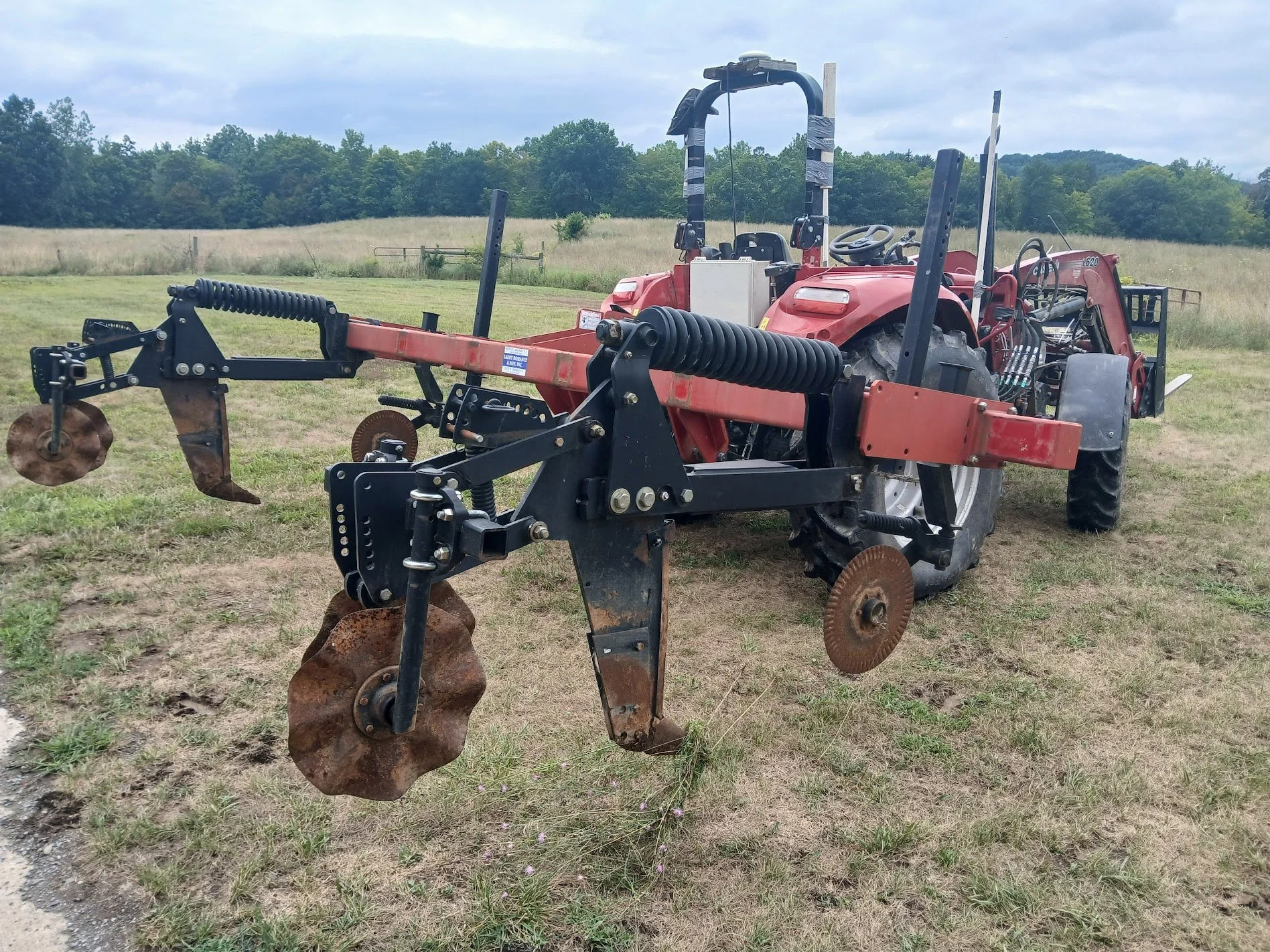
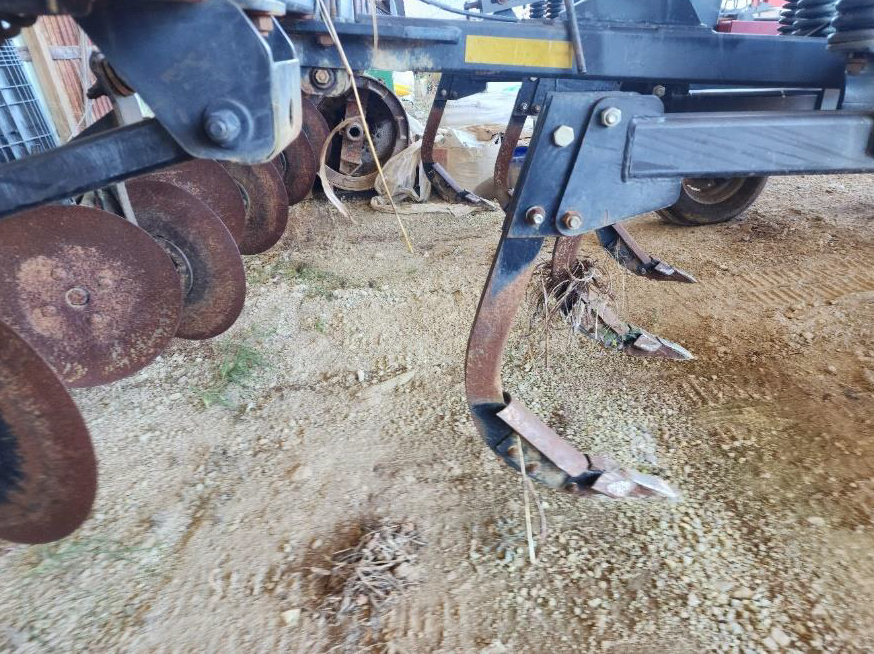
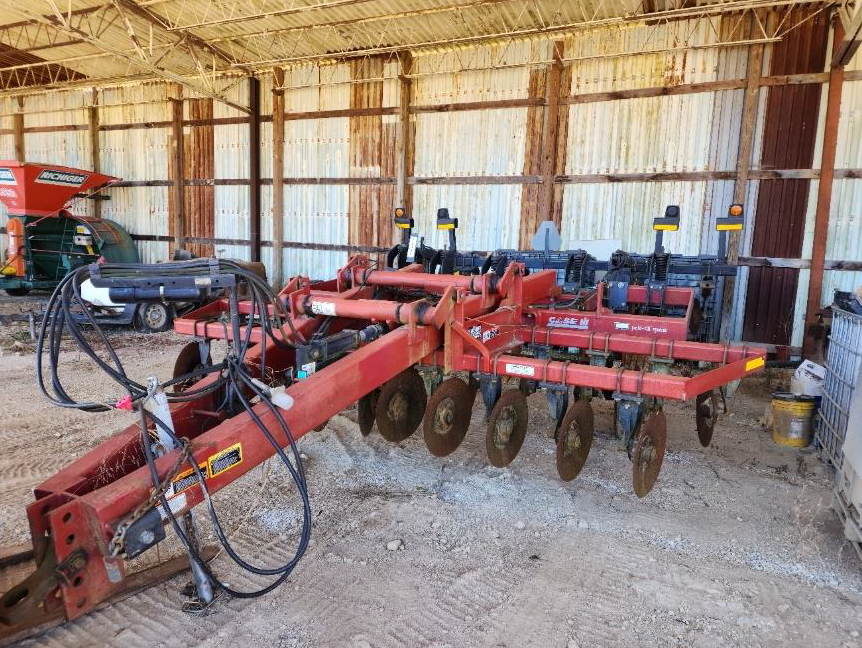
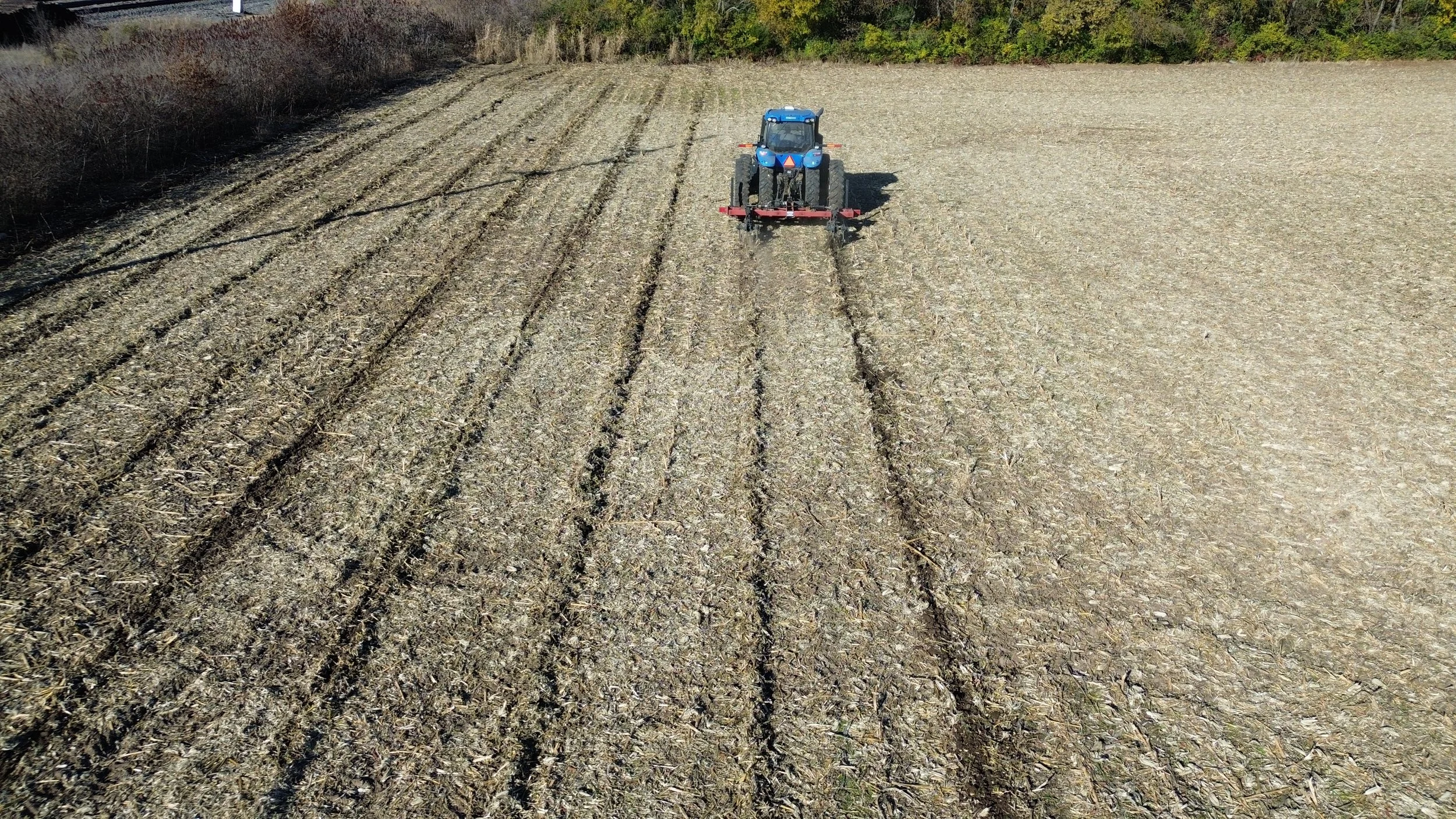
The ZoneBuilder at work in Ohio. 200+ acres were prepared for a forestry planting.
Healthy tree roots require deep, uncompacted soil. Tillage helps prepare ground for trees roots and orchard groundcovers to establish successfully.
Subsoiling (10+inch) is often not needed for annual crops because their roots are more shallow; perennial crops often root more deeply. Roots that can access the deeper layers of soil will ensure stronger, more stable, and drought-tolerant plants. Subsoiling can break up fragipan — a hard soil layer in extremely compacted soil into which tree roots cannot penetrate.
Primary tillage (6+ inch depth) can support breaking up residue, topsoil, and subsoil. Deep tillage improves aeration, drainage, and rooting area for trees to grow.
Secondary tillage (1-6 inch depth) often follows subsoiling and primary tillage, especially if ground preparation involves seeding a cover crop or groundcover. Secondary tillage breaks down surface clods left by primary tillage, levels and smooths the soil surface, incorporates residues or newly emerged weeds, and improves seed-soil contact for ground cover/cover crop establishment.
Different implements may be needed depending on the intensity of preparation needed, as well as the species and system being planted. Some implements combine multiple functions (deep shank rip, discing, rototilling) to reduce the number of passes required.
Some examples of our tillage equipment options include:
What does a well prepared field look like? This site in NY was cleared/graded, tilled, and seeded with in-row cover crop and a between row groundcover designed for orchards.
Chisel Plows / Ripper Plows – Primary deep-rip implements used to fracture compacted soil layers and hardpans (typically 12–24+ inches).
Single- or Multi-Shank Subsoilers – Lower-disturbance deep tillage options that break compaction below the fragipan with minimal inversion; often used in planting rows or zones rather than for full-field prep. The Zonebuilder is a combination tool that opens a slot, deep-shank rips, and breaks soil up with a disc to prepare a plantable strip in a single pass.
Disc Implements – Primary & secondary tillage tools used to break up & incorporate residue/organic matter and reduce surface clods.
Harrows & Cultivators – Shallow finishing tools (1–6 inches) that smooth and level the soil surface, incorporate residues or weeds, and improve seed–soil contact for cover crops or groundcover establishment.
Rotary Tillers – Intensive secondary tillage tools for shallow soil pulverization and residue incorporation; typically limited to planting strips and small ti medium sized orchards, or species requiring high-intensity preparation.
Cultimulchers - Create a fine, level seedbed.
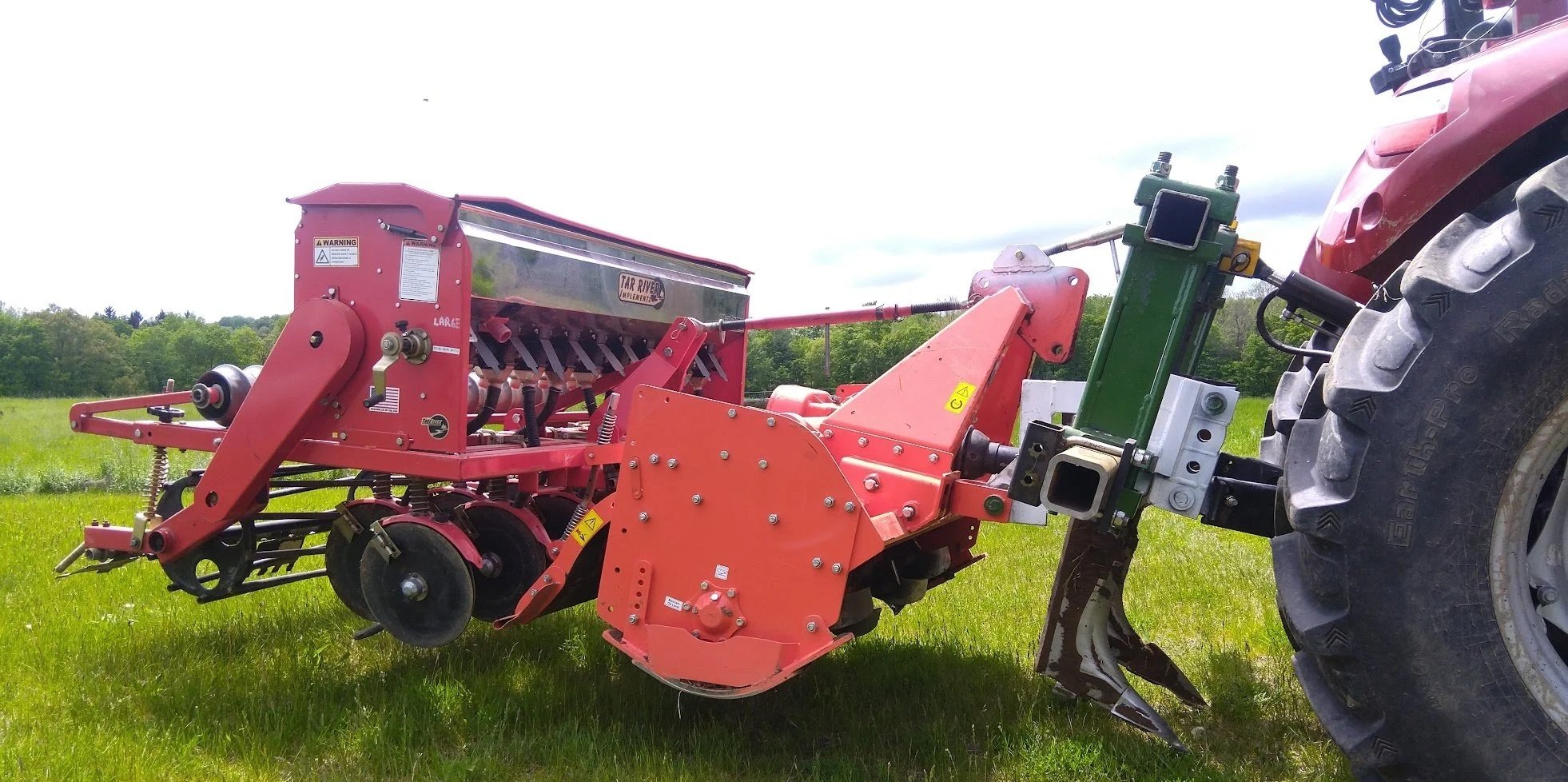
Gizmo - A deep shank ripper, rototiller, & seeder.
What is the “Gizmo” - Our Equipment Manager, Bob, is the mastermind behind the “Gizmo,” which combines primary tillage, secondary tillage, seeding, and other actions into a single unit, reducing the number of passes required to prepare and plant out a site while ensuring the high-quality conditions for successful establishment are met.
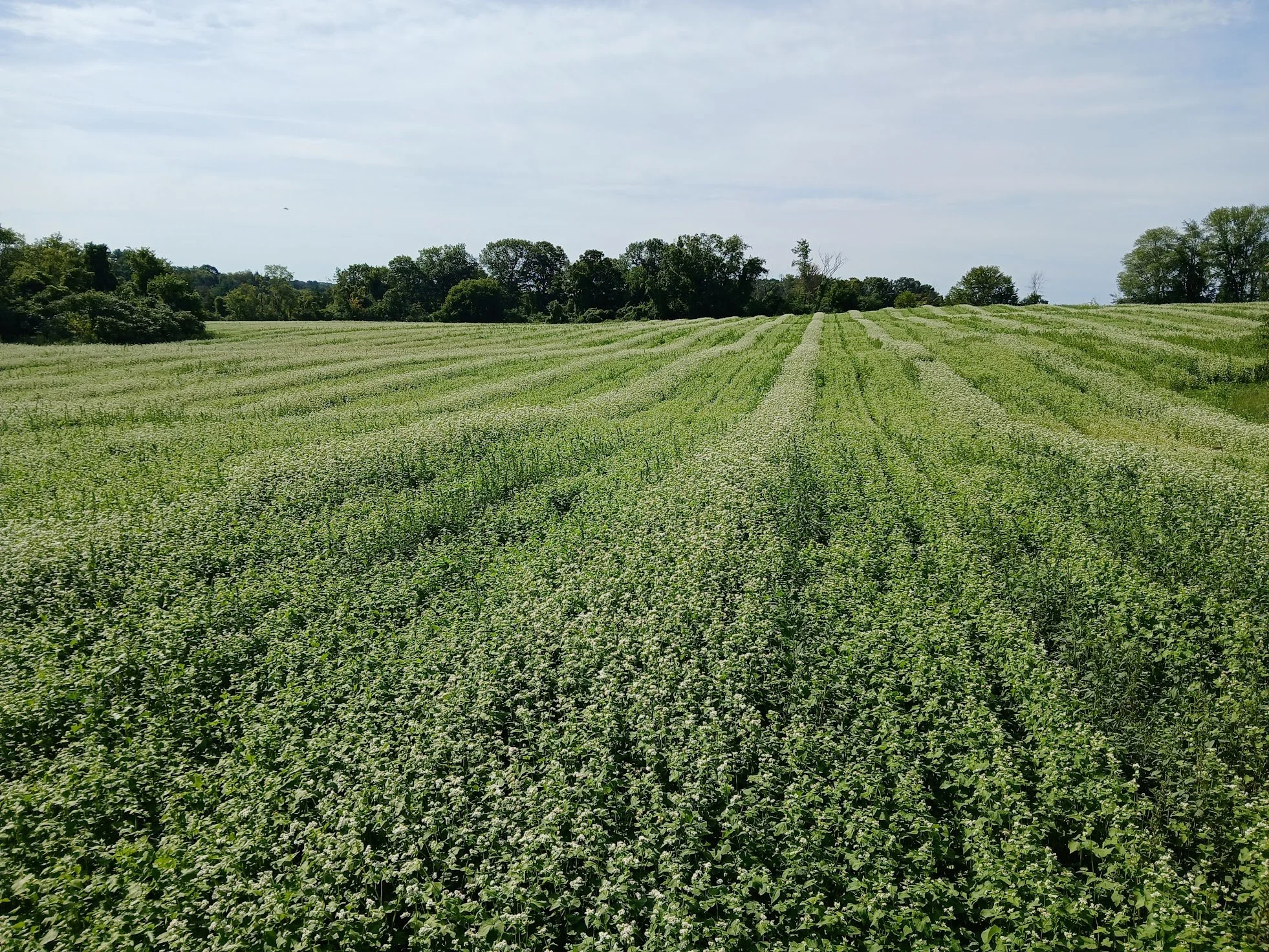
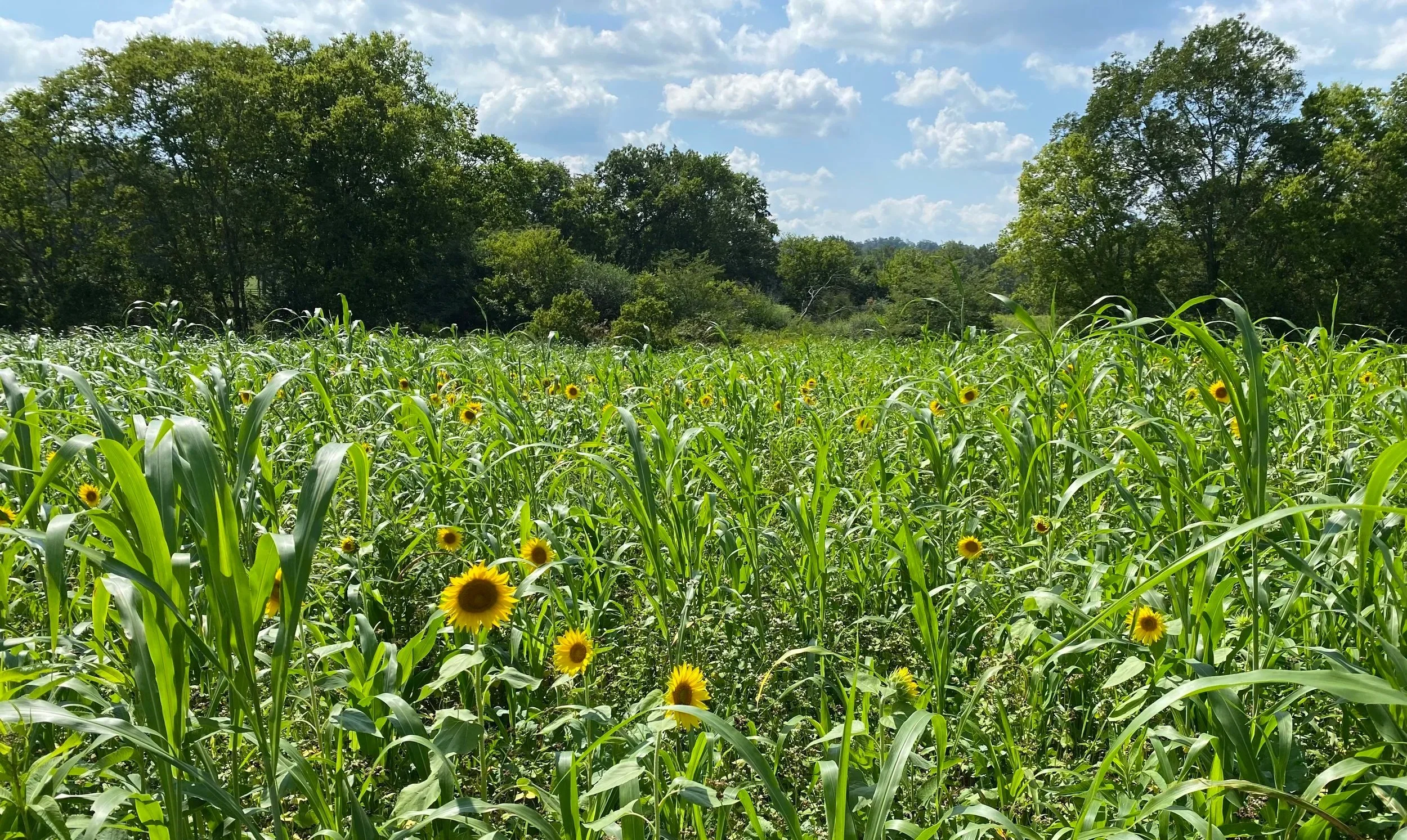
A lush cover crop planted at Tate farm in Tennessee - includes eight species including sorghum-sudangrass, millet, and sunflower.
4. Cover Crop & Grass Establishment Between Rows
Site preparation often involves cover cropping and groundcover establishment. Sometimes, whole fields are cover cropped prior to planting, especially if building soil quality and suppressing weeds prior to tree establishment is desired; other times, cover crop is seeded only within perennial crop rows, providing a weed-free strip during the early establishment phase. Groundcovers can be seeded during whole-field conversion to establish a desirable mix of grasses, legumes and broadleaves, whether it be for pollinators, livestock forage/hay, or simply to reduce the presence of noxious weeds and allelopathic species.
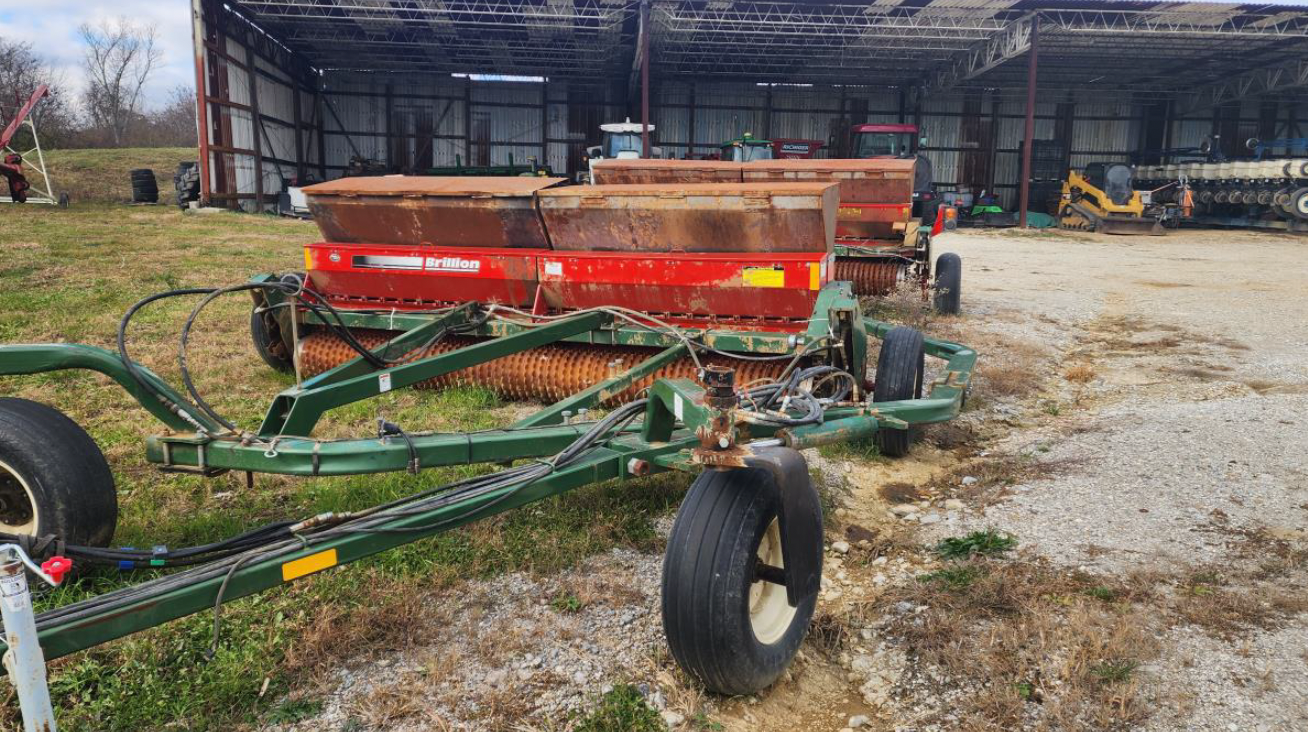
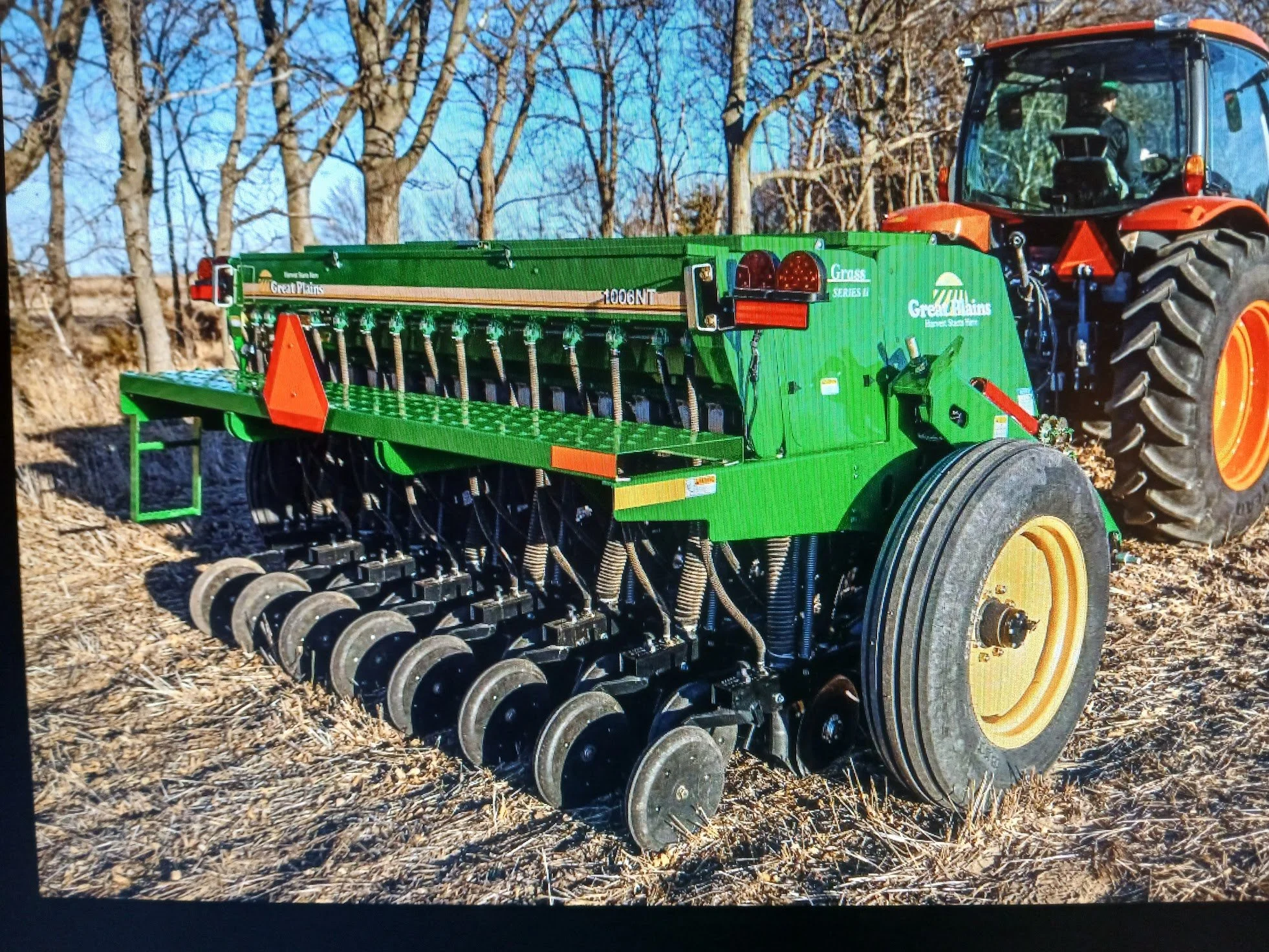
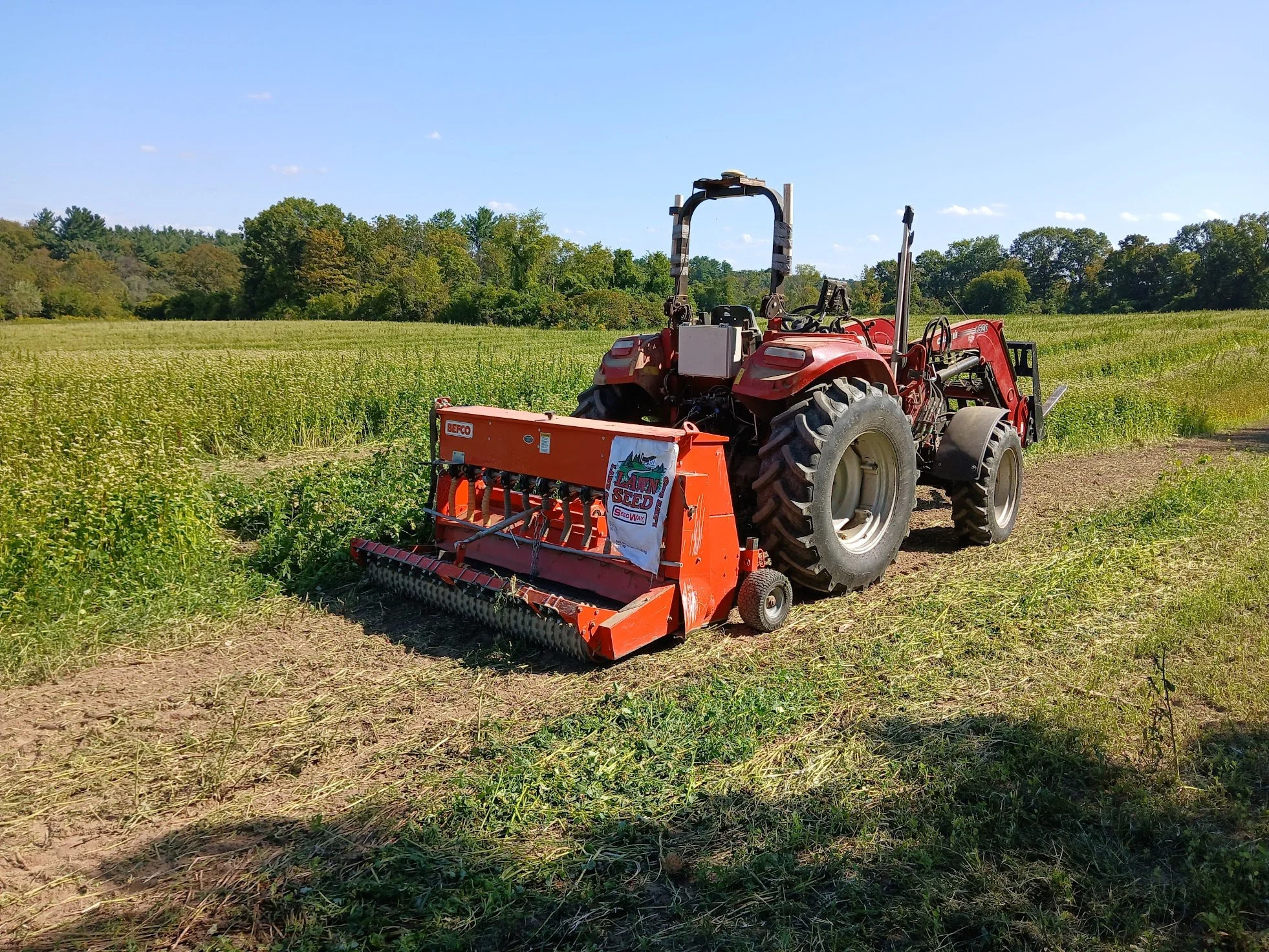
Drill Seeders – High-precision roller seeders and drills for controlled-depth seeding of grasses and cover crops (or alley crops if applicable).
Broadcast Seeders – Used for surface application of seed or amendments, which may be followed by discs or cultimulchers to ensure good seed-soil contact.
No Till Drills – Designed to place seed at a controlled depth into soils with a high amount of residue, used in conservation applications where tillage is avoided.
Ripping and marking happening simultaneously. A shank is breaking up the subsoil, while pressurized paint marks tree locations.
5. Precision Layout, Marking & Navigation
Marking requires an auto-steer tractor system with sub-inch GPS accuracy, ensuring uniformity across planting. Marking ensures accurate spacing for tree and shrubs is maintained while enabling efficiency for planting crews. Marking can happen mechanically or manually.
Paint (pressurized or spray paint can) – A GPS-signal from the tractor triggers the spraying of paint every X number of inches or feet. Capable of marking exact tree locations.
Cross-Hatching - Tree rows & landmark lines (lines running perpendicular to tree rows) are ripped with a shank. Where the lines meet, a tree is planted. Again, requires an auto-steer tractor with sub-inch accuracy.
Flags & Measuring Tools - Efficient field crews can mark tree locations manually. Ideal for smaller jobs.
6. Odds & Ends - Transport, Mowers, Trailers, and more.
Mowers (In-Row & Zero-Turn) – Used for mowing within tree rows.
UTV – Used for in-field transport and rapid movement during planting days.
Fuel Trailer – Ensures uninterrupted operation of heavy equipment across multiple farms.
Trailers – Move equipment, trees, and supplies between farm sites.
Service Truck – Carries tools and supports field repairs.
7. Transplanters
CJ from the Propagate team on the transplanter, which is also equipped for simultaneous watering.
Machinery is not a requirement for efficiently planting a site to orchards or agroforestry systems. Well-coordinated and well-trained field crews can often plant trees faster and with greater control over outcomes. However, finding planting crews can be difficult, especially during peak planting season in the fall and spring. Transplanters and custom planting rigs are great options for precision planting.
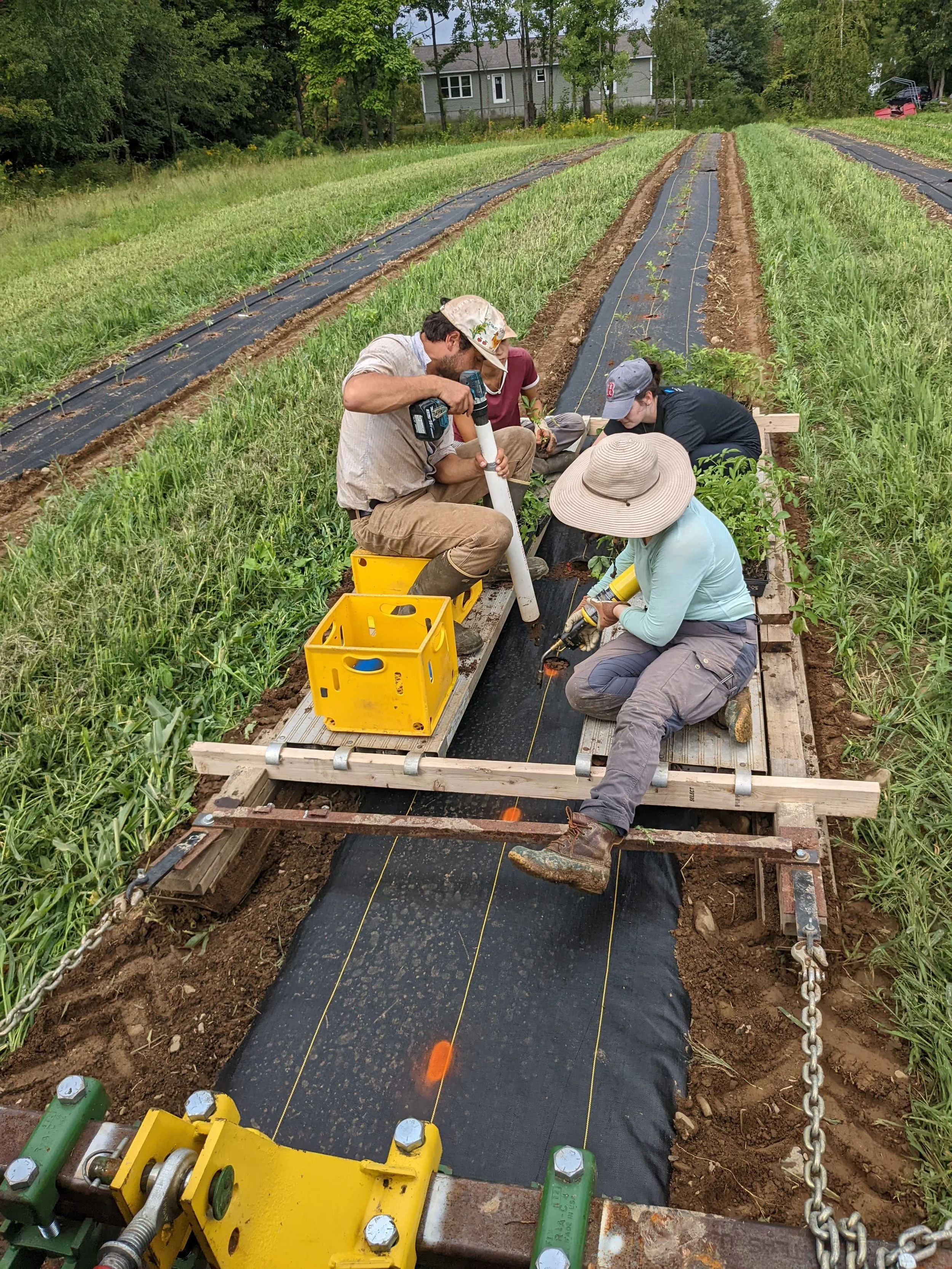
An elderberry and currant planting sled.