
Agroforestry and Beekeeping
Bees and Trees: The Perfect Mutualism
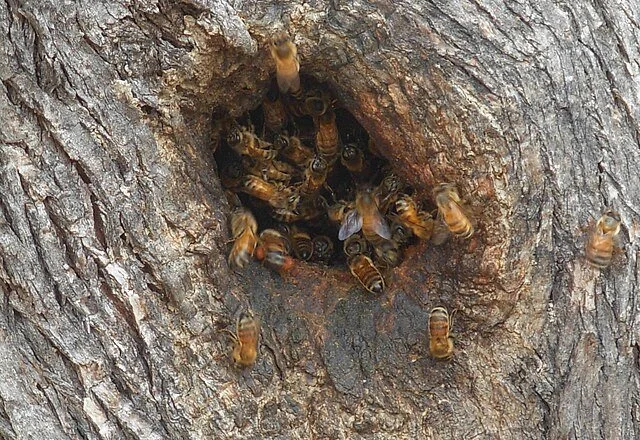
Bees occupying a tree cavity. Photo via Creative Commons.
In the wild, a spacious tree hollow is the preferred nesting site for honeybees. A tree’s thick walls ensure overwintering bees are protected from cold, the organic matter within a tree helps control moisture during winter, and the temperature gradient inside the hollow helps maintain airflow – all factors that contribute to honeybee health and winter survival.
Trees also provide bees with significant floral resources. Blooming earlier in the season than most herbaceous plants, perennials like Silver Maple and Willow provide forage during the early spring months when the honey supply of overwintered bees runs critically low. Mid- to later-season blooms from trees like Chestnut and Locust help hives build up honey supplies during key honey flows, providing ample nectar, propolis, and pollen, as well as important minerals, antioxidants, organic acids, and other compounds to maintain honeybee health.
This mutualism between bees and trees speaks to the value of agroforestry systems to beekeepers.
Integrating woody perennials on the farm – whether in a windbreak, riparian buffer, silvopasture system or woody polyculture – can improve honey production and colony health.
Below we discuss the benefits of integrating different tree crops on the farm to improve honey production and ensure consistent flowering blooms throughout the season.
Agroforestry Options for Varietal Honey Production
Beekeepers looking to earn more per lb of honey often produce “monofloral honey”— or honey sourced from a single botanical origin. The mechanism behind varietal honey is “floral fidelity,” referring to the tendency of a hive to forage on one plant species at a given time. For beekeepers, floral fidelity enables the production of specialty varietal honeys, such as tupelo honey, orange blossom honey, or — as we discuss below — chestnut and locust honey.
Chestnut Honey
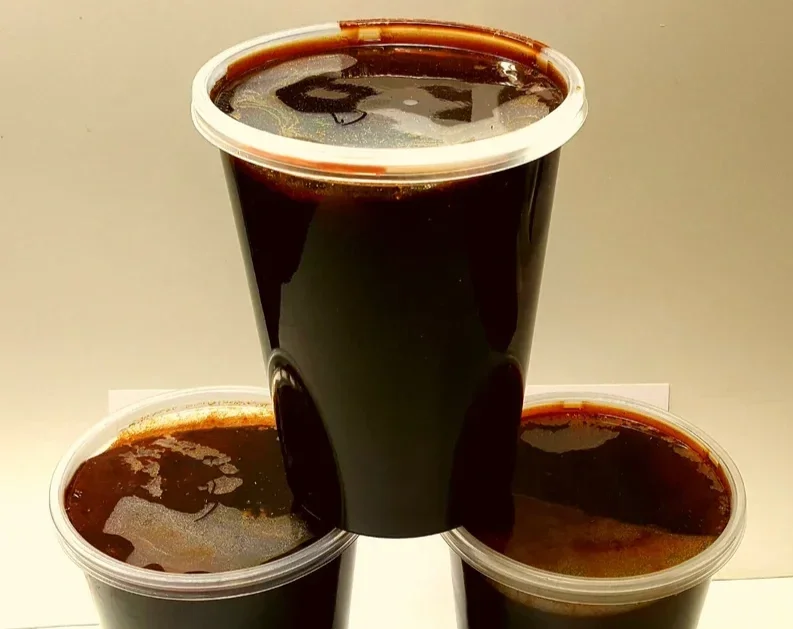
Chestnut honey is among the darkest honeys. Available for sale from Walla Walla Honey.
Chestnut honey is produced around the world, but to a limited extent in the United States. With a dark color similar to a buckwheat or knotweed honey, chestnut honey rivals manuka honey in its antimicrobial properties (1), while the complex, smokey, almost spicy flavor and mono-floral cachet fetch a higher price at market. Dark honeys like chestnut and heather honey contain a higher mineral content and antioxidant capacity than lighter colored honeys (2), and the higher phenolic profile of these darker honeys may reduce pesticide toxicity to honeybees (3).
Both nectar and pollen production in chestnut flowers contributes to high honey yields. Kim et al. show that nectar production varies according to chestnut species (4), with Japanese chestnuts producing the highest nectar volume, and Chinese chestnuts producing nectar with higher Brix (sugar) concentrations. Other studies show nectar volume and Brix peak at different times during chestnut bloom (5), with nectar appearing to ooze from the catkin as a sticky material (6). Chestnut trees are also also notoriously prolific pollen producers, supplying bees with pollen that is high in antioxidants and phenolic compounds (7).
One source writes that “one [acre] of chestnut forest in favorable conditions can yield [134–294] lbs of honey per season” (8) From just the chestnut blooms, the honey yield may be around 59 lb per 100 trees (9). These figures likely represent maximum productivity scenarios; in reality, yield will depend on stocking rate (hives per acre), number of hives, and the maturity of trees. A single hive can reportedly yield between 16.07 and 28.8 lbs of just chestnut honey per season (10). A small commercial scale apiary on an established chestnut farm with a diverse flowering understory may consider keeping 1 hive per acre of available blooms. If 10 hives are kept on 10 acres of chestnut forest, and honey is sold at $20 per lb, chestnut farmers with a sideline apiary could sell between $3,214 and $5,760 of chestnut honey per year. The chestnuts at maturity could gross an additional $60,000 (assuming 2000 lbs/acre and $3/lb). Keep in mind: Most seasoned beekeepers will tell you: “If you want to make money, don’t be a beekeeper.” We tend to agree with this statement, but also recognize that a creative entrepreneur (and skilled beekeeper) with a dedication to marketing varietal honey could carve out a niche. Chestnuts would be the primary revenue driver.
Although chestnuts are wind pollinated, introducing a second pollination strategy—honeybees— significantly increases chestnut fruit set (11). This could increase yields, speaking to the value of keeping honeybees in chestnut orchards.
Chestnut honey is also high in organic acids that are used to control Varroa mite (namely formic acid and oxalic acid, which are found in chestnut honey as volatile esters) (12). Whether the organic acid content of honey provides any Varroa defense is unstudied. Some researchers are investigating whether bees self-medicate on thymol-containing flowers (Wild Bergamot) Thymol is another naturally-derived Varroa control, and this research could serve as a mechanistic analogue; however, the outcomes of this research are unpublished. An approved treatment list for Varroa mites can be found here.
Black Locust Honey
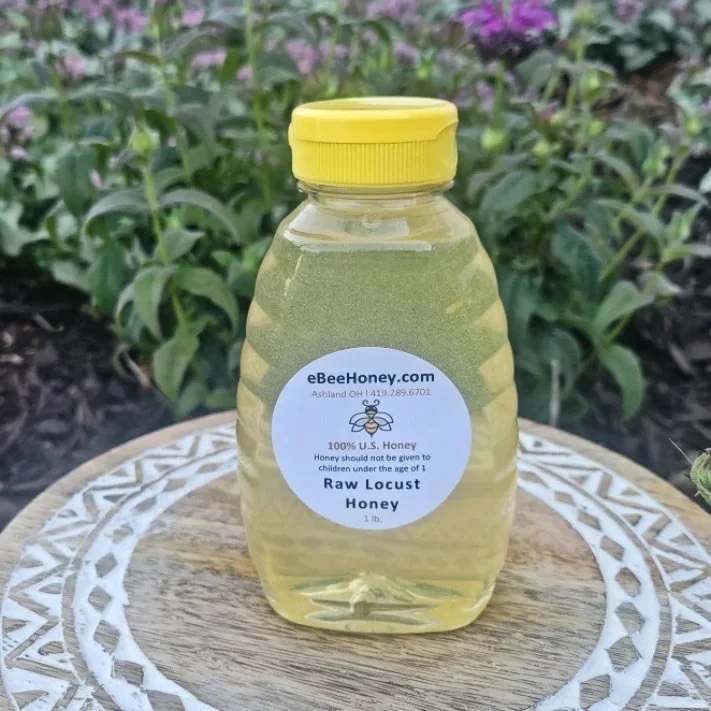
Black locust honey is among the clearest available. For sale: eBeeHoney.
Throughout Europe and the United States, “acacia honey” is a coveted varietal honey, prized for its delicate, vanilla-like flavor. However, what’s often marketed as “acacia honey” is actually pseudo-acacia honey, sourced from Black Locust, Robinia pseudoacacia.
Though native to North America, Black locust is foundational to honey production in many Eastern European countries. Each large, white, deliciously fragrant flower yields 2mg nectar per day (13), which is a higher nectar volume than other common nectar sources (Sunflowers - .81 mg/day; Clover - .1 mg/day) (14). In terms of honey yields, Romanian researchers estimate that 1 acre of continuous locust forest can yield 338.7lb of honey, or 17lb from a single tree (15).
If planted at 646 trees/acre, a black locust timber project could yield around $104,000/acre in timber sales. Adding honey production could gross an additional $5,419.20, if sold at $16 per lb.
Local weather conditions significantly affect the availability of black locust nectar, with late frosts limiting black locust honey production. First bloom for locust occurs around 467 Growing Degree Days (GDD), which occurs after the last frost. A single tree may bloom for about 10 days (with the last bloom occurring around 548 GDD), but some varieties (such as Turbo Obelisk) are selected for later flowering, extending the bloom season and reducing the risk of frost-related flower abortion.
Agroforestry Ensures Year-Round Blooms
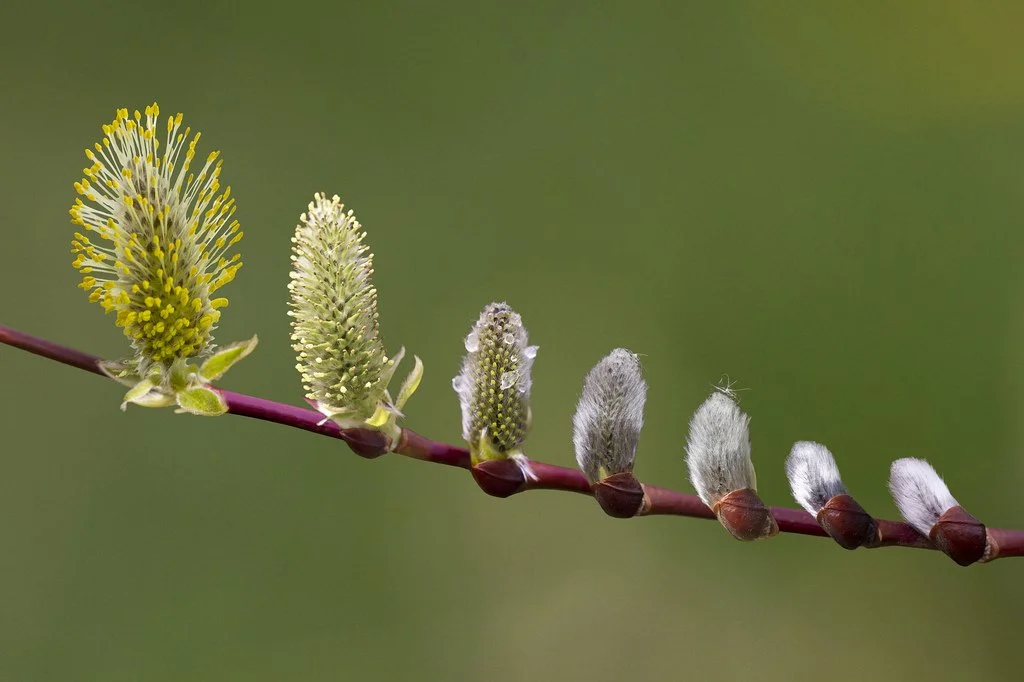
Willow, from bud to bloom. Photo courtesy Nativenygardens.
Agroforestry systems are characterized by diverse species assemblages, contributing to longer periods of consistent blooms. Here in the United States, habitat loss and fragmentation results in a dearth of floral resources for bees, necessitating supplemental feeding with sugar water to prevent starvation and build up colony strength. This is especially true in mid- to late-summer.
Agroecosystems with diverse overstories (flowering trees) and understories (flowering orchard covers, alley crops, shade tolerant trees and shrubs) are more likely to support both native pollinators and honeybees. We encourage you to learn about native bee conservation, as well.
_______________________________________________________________________
Late Winter - Early Spring
Willow
One of the earliest-blooming species.
Grown in riparian buffers, windbreaks, and otherwise wet soils as an ornamental for floral arrangements, as material for basketry, or as fodder for cattle within silvopasture systems.
Not a nectar source, but provides important early-season pollen supplies for bees. Cross-landscape studies show that during the early spring before clover starts blooming, flowering woody species like Malus (apple), Prunus (cherry), and Salix (willow) are the most foraged plants.
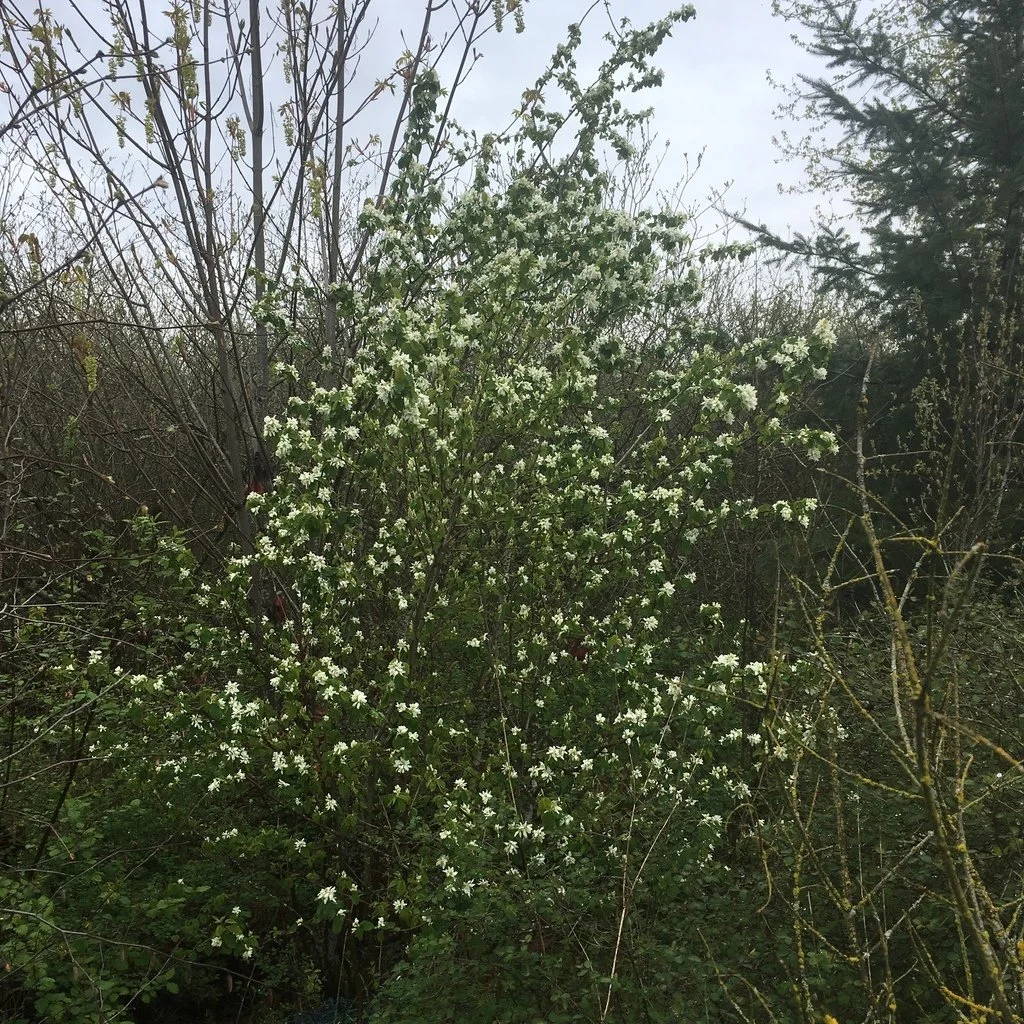
Saskatoon serviceberry. Observation © Harry Podschwit.
Silver Maple and Sugar Maple
Another one of the earliest bloomers (32 GDD), silver maple provides early-season nectar and pollen for bees. Sugar maple blooms around the same time, 30 GDD.
Commonly found in riparian buffers and tolerant of a wide range of soils, the sugar content of silver maples is around 1.5-3.5%, requiring a longer boiling time than sugar maples.
Cherries
Sweet cherries enter full bloom around 131 GDD, tart cherries around the same time, but exact timing will depend on cultivar.
Prunus species produce abundant nectar and pollen that support pollinators.
Cherries are frequently planted in orchards, windbreaks, and diversified agroforestry systems, and wild Prunus species in hedgerows can provide important forage.
Serviceberries
Allegheny serviceberries begin blooming as early as 153 GDD, while other serviceberries, e.g. Regent, will begin blooming later in the season.
Serviceberries are popular within windbreaks and biodiversity plantings, producing a tasty berry that has only been commercialized by a few operations, but that may fetch a decent price at farmers markets.
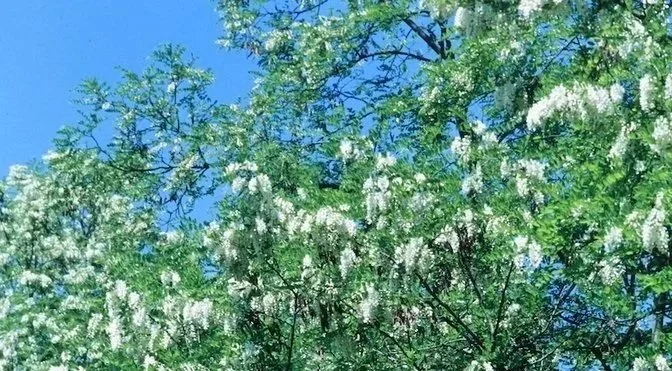
Black locust in full bloom. Observation © Jltasset.
Spring
Apples
Typically bloom in mid-spring, depending on cultivar and region.
Apples are an important nectar and pollen source for bees, supporting colony buildup after early tree species finish blooming.
Widely planted in orchard systems, windbreaks, and diversified agroforestry plantings. Wild Malus species serve as important pollinator resources in hedgerows and field edges.
Black Locust (see above)
Bloom between 467-548 GDD
__________________________________________________________________________________________________________________________________________________________________________________________
Late Spring - Early Summer
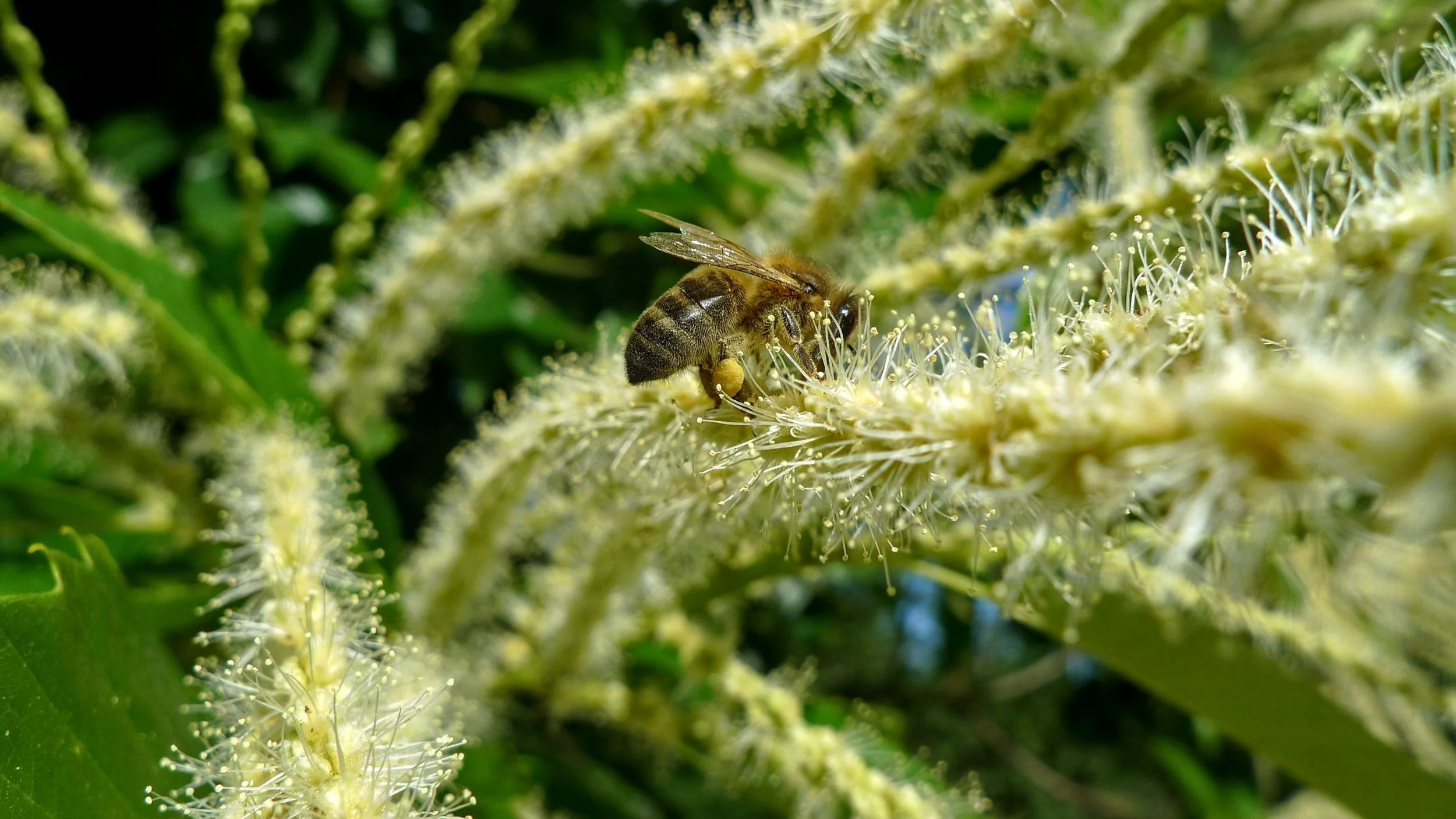
A honeybee pollinating a chestnut catkin. Observation via BeeWiki.
Elderberry
Bloom later – 751 GDD.
Elderberries produce large umbels with abundant nectar and pollen, attracting a wide diversity of pollinators including honeybees, bumblebees, flies, and beetles. They are commonly grown in riparian buffers, hedgerows, and perennial fruit systems, where they provide both pollinator habitat and a commercial berry crop.
Elderberries tolerate moist soils and periodic flooding, making them particularly suitable for edge-of-field plantings and water quality buffers in agricultural landscapes.
Chestnuts (see above)
Bloom between mid-June and late-July. Pollen is typically described as abundant around 960-1113 GDD.
______________________________________________
Autumn - Winter
Witch Hazel
Finding late-blooming woody species is a challenge; however, witch hazel is one promising option.
One of the latest-blooming woody plants in temperate North America, flowering after most trees have dropped their leaves.
Commonly found in forest understories, riparian edges, and hedgerows, where it tolerates shade and a range of soil moisture conditions.
Produces fragrant yellow ribbon-like flowers in late fall (October–November) that provide late-season nectar and pollen for pollinators active during warm autumn days, including bees, flies, and moths. Because it flowers so late in the season, witch hazel can extend forage availability for pollinators when most other woody species have finished blooming, helping sustain insects prior to winter dormancy.
Hives That Mimic a Tree Hollow? Finding the Right Configuration for Your Context
Some beekeepers are moving away from the widely used Langstroth hive and towards hives that more closely mimic the natural environment of bees — a tree hollow.
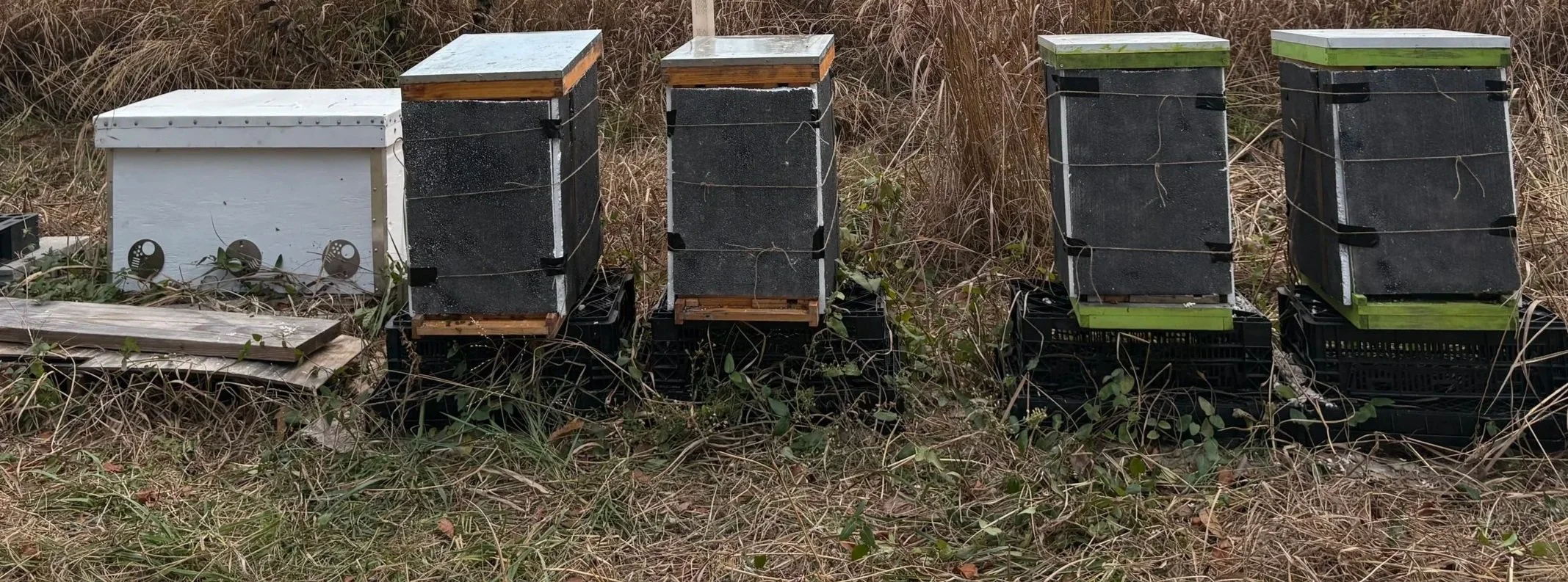
Layens hive (left) vs. Langstroth (right). Langstroth hives are insulated, while the thick walls of the Layens hive mean insulation is not required.
The Langstroth hive was first developed in Miami, OH during the 19th century by Leonardo Langstroth. Following its invention, the Langstroth hive became the predominant hive body used throughout the world, leading to the industrialization of beekeeping and the replacement of many regionally-adapted practices and indigenous variants of the hive body. Today, many beekeepers report that the Langstroth hive’s thinner walls and vertical configuration creates challenges for successfully wintering bees in cold climates, and can create added stress on bees during hive inspections when boxes are repeatedly shifted.
The Layens hive or “horizantal hive,” popularized in the US by the University of Missouri Center for Agroforestry’s Dr. Leo Sharashkin, is one alternative to the Langstroth hive, with thicker walls that more closely resemble a tree’s insulative capacity, a horizontal configuration for reduced stress, and frames that enable better airflow between comb. After trying out the Layens hive this year, some challenges with high moisture levels in the hive emerged; this can be a death sentence for bees during winter. Moisture is typically solved for in Langstroth hives through the addition of a “quilt box” on top of the hive, preventing condensation from dripping down on the bees. Adding absorbent material in the upper part of the Layens box can resolve this challenge.
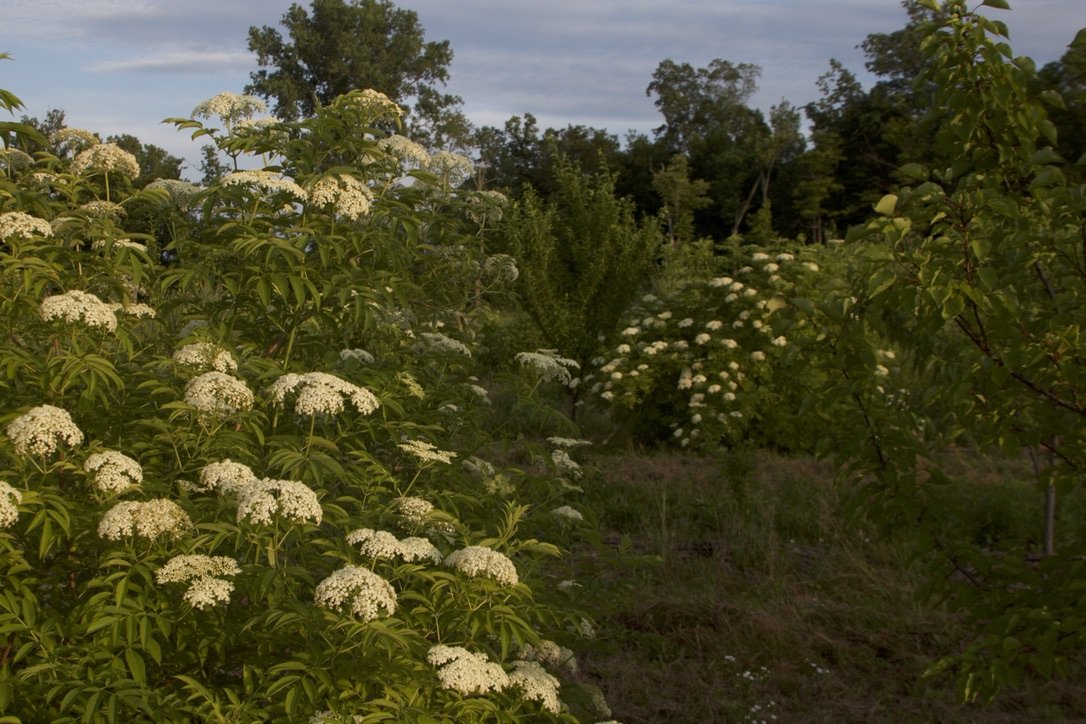
Elderberry Production on a Propagate-managed from in Hudson, New York.
Interested in Integrating Trees on Your Farm?
Propagate is an agroforestry service provider. We offer a number of services to farmers and landowners looking to plant trees.
Farm Management
Monitoring, Verification & Reporting
Citations
Ünlü, Ayşe & Altunkılıç, Fatma & Asgari, Yelda & Demirtaş, Sena & Gökyer, Şeyda & Kıran, Fadime & Huri, Pınar & Takaç, Serpil. (2024). Property-Wound Healing Relationship of Manuka-, Anzer- and Chestnut-Honey: Characterization, Antibacterial Properties and Cell Culture Applications. Turkish Journal of Agriculture - Food Science and Technology. 12. 1826-1834. 10.24925/turjaf.v12i10.1826-1834.6869.
Karabagias, I. K., Maia, M., Karabagias, V. K., Gatzias, I., & Badeka, A. V. (2018). Characterization of Eucalyptus, Chestnut and Heather Honeys from Portugal Using Multi-Parameter Analysis and Chemo-Calculus. Foods (Basel, Switzerland), 7(12), 194. https://doi.org/10.3390/foods7120194
Liao LH, Wu WY, Berenbaum MR. Variation in Pesticide Toxicity in the Western Honey Bee (Apis mellifera) Associated with Consuming Phytochemically Different Monofloral Honeys. J Chem Ecol. 2024 Aug;50(7-8):397-408. doi: 10.1007/s10886-024-01495-w. Epub 2024 May 18. PMID: 38760625; PMCID: PMC11399171.
Kim, Y. K., Lee, S., Song, J. H., Kim, M. J., Yunusbaev, U., Lee, M. L., Kim, M. S., & Kwon, H. W. (2020). Comparison of Biochemical Constituents and Contents in Floral Nectar of Castanea spp. Molecules (Basel, Switzerland), 25(18), 4225. https://doi.org/10.3390/molecules25184225
Park, J.-M.; Kim, H.-J.; Won, S.-J.; Na, S.-J. Variation in Floral Nectar Traits of Four Chestnut (Castanea spp.) Cultivars: Implications for Pollinators and Apiculture. Agriculture 2025, 15, 2358. https://doi.org/10.3390/agriculture15222358
Presentation, NNGA (2025). https://www.youtube.com/watch?v=lETSs6UGIyA&list=PLDcHbO7CBaBvEEiya1FSh0XN-RCFJsZ7y&index=20
Kolayli, S., Birinci, C., Kanbur, E.D. et al. Comparison of biochemical and nutritional properties of bee pollen samples according to botanical differences. Eur Food Res Technol 250, 799–810 (2024). https://doi.org/10.1007/s00217-023-04428-1
LiveBeekeeping. Chestnut honey: what it is, why it tastes bitter, composition and properties. LiveBeekeeping blog. 2025. Available at: https://livebeekeeping.com/honey/chestnut-honey/
Grygorieva, O., Nikolaieva, N., Brindza, J., & Klymenko, S. 2015. Pollen and bee pollen features of sweet chestnut (Castanea sativa Mill.).
Diktas-Bulut, N., Daşdemi̇r, I., & Bozlar, T. (2022). ECONOMIC ANALYSIS OF CHESTNUT HONEY PRODUCTION IN THE NATURAL CHESTNUT FORESTS OF EASTERN BLACK SEA REGION, TURKEY. The Journal of Animal and Plant Sciences.
Larue, C., Austruy, E., Basset, G., & Petit, R. J. (2021). Revisiting pollination mode in chestnut (Castanea spp.): an integrated approach. Botany Letters, 168(3), 348–372. https://doi.org/10.1080/23818107.2021.1872041
Bogdanov, Stefan & Charrière, Jean-Daniel & Imdorf, Anton & Kilchenmann, Verena & Fluri, Peter. (2002). Determination of residues in honey after treatments with formic and oxalic acid under field conditions. Apidologie. 33. 399-409. 10.1051/apido:2002029.
Keresztesi B (1983) Breeding and cultivation of black locust, Robinia pseudoacacia, in Hungary. Ecol Manag 6:217–244. 10.1016/S0378-1127(83)80004-8 [Google Scholar]
University of Exeter, PDF download.
Samsonova, Irina & Mannapov, A & Khisamov, R & Plakhova, A & Sattarov, Vener. (2020). Analysis of honey productivity of robinia ( Robinia pseudoaca-cia L.) plantations in forest vegetation conditions of the steppe don region. IOP Conference Series: Earth and Environmental Science. 574. 012071. 10.1088/1755-1315/574/1/012071.